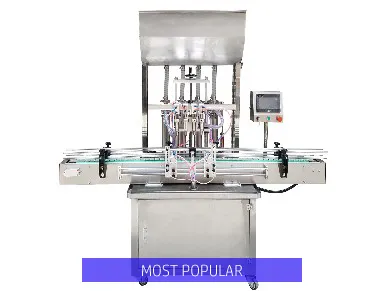
Liquid filling machines UK

Liquid filling machines for bottles, jars, cans and containers.

Lancing supplies liquid filling machines for production teams that need repeatable filling accuracy, practical changeovers and the option to scale from a semi-automatic machine to a fully automatic filling line.

Liquid filling machines for bottles, jars, cans and containers.

Specification guide

How to choose the right system.

These notes are written for buyers comparing filling machinery options before requesting a quotation.

Choosing the right liquid filling method

The correct filler depends on viscosity, foaming behaviour, product compatibility, fill volume, container shape and target output. Free-flowing liquids may suit peristaltic, gear pump, gravity or flow-meter filling. Thicker liquids, creams and sauces often suit piston, volumetric or rotor-lobe filling. Corrosive liquids require careful wetted-part selection, while flammable liquids may require ATEX assessment.
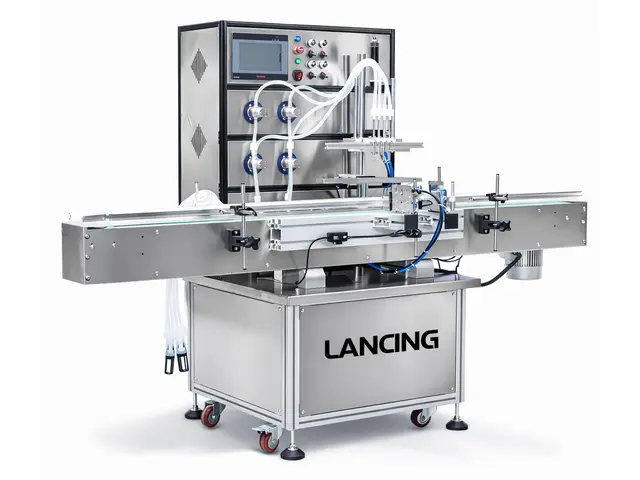
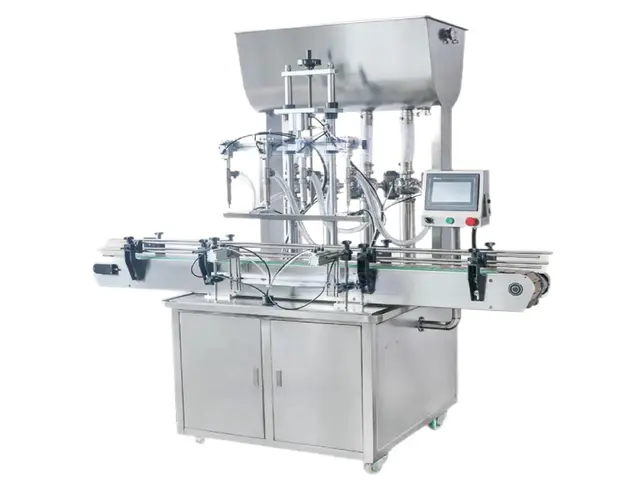
Information needed for a reliable quotation

For a useful machine recommendation, prepare the product name, fill range, container dimensions, cap or closure type, expected bottles per minute and any hygiene, hazardous-area or clean-down requirements. These details help determine the number of filling heads, nozzle type, pump technology, conveyor layout and whether capping or labelling should be integrated.

Why buyers choose a machinery specialist

A filling machine is normally part of a wider packaging process. Lancing can review the liquid, container and production target before specifying a standalone filler, compact automatic machine or full production line with capping, labelling, conveyors and accumulation.

Key considerations

What affects the machine specification?

Free-flowing liquids

Peristaltic, diaphragm, gravity, gear-pump and flow-controlled systems can suit water-like or low-viscosity products.

Viscous products

Piston, volumetric, heated hopper and rotor-lobe configurations support creams, sauces, gels and pastes.

Small to large containers

Machines can be specified for small bottles, jars, jerrycans, buckets and larger industrial containers.

Production scaling

Start with semi-automatic filling, then step up to compact or fully automatic lines as output grows.

Relevant machines

Lancing filling machinery to review.

View all products
Liquid Filling Machinery product image

Liquid filling machines

Liquid Filling Machinery

Liquid filling machines configured for free-flowing, foamy, corrosive, hygienic or high-value liquids in bottles, vials, jerrycans and buckets.

View details
Automatic Peristaltic Filling Machine product image

Automatic filling machines

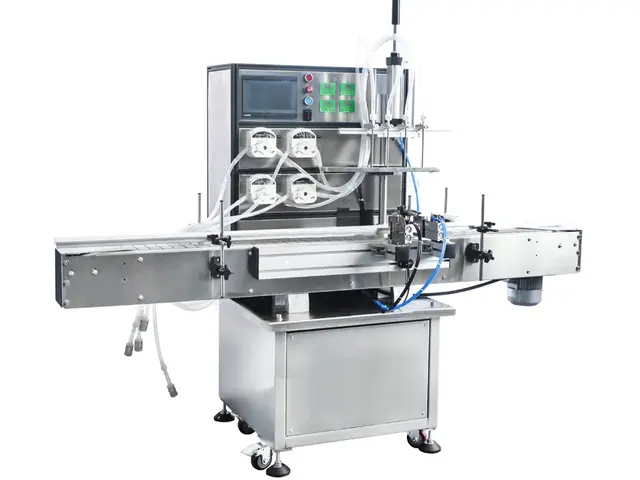
Automatic Peristaltic Filling Machine

Servo‑controlled peristaltic filler with touch HMI. Dosing volume is set directly on the screen—no need to time the fill. Four peristaltic channels keep product inside disposable t…

View details
Semi Automatic Volumetric Filling Machines product image

Semi-automatic filling machines

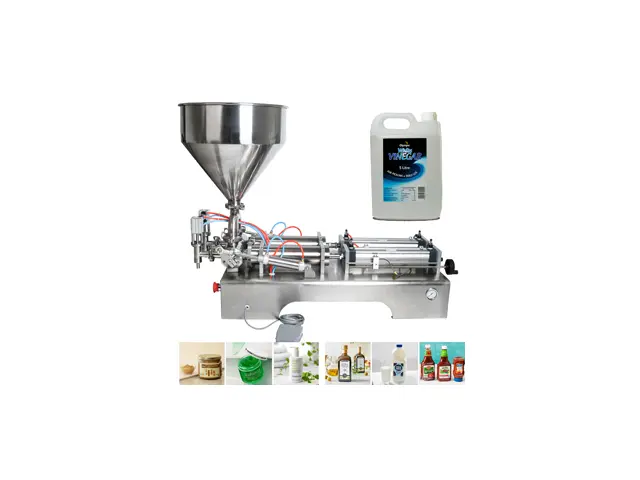
Semi Automatic Volumetric Filling Machines

The semi-automatic system offers separate machines each requiring manual product placement but still affording a very significant improvement in production rates compared to manual…

View details
Semi Automatic Vacuum Filling Machines product image

Semi-automatic filling machines

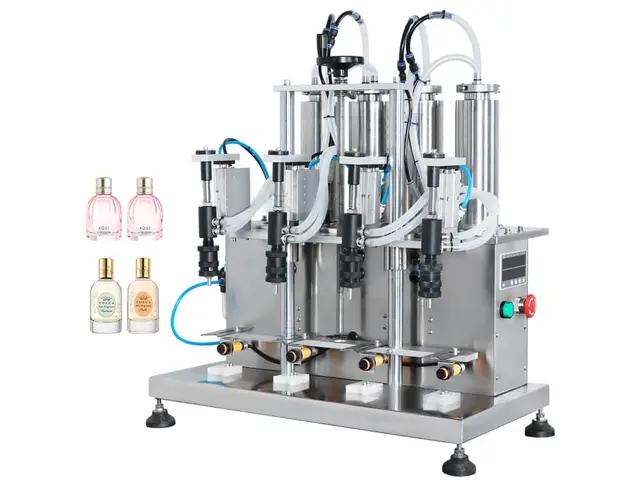
Semi Automatic Vacuum Filling Machines

Overflow Vacuum Fillers are designed to fill to a level rather than to dispence a specific volume of liquid. Ideal for applications with inconistent glass bottles where the level a…

View details
Automatic Gear Pump Filling Machines product image

Automatic filling machines

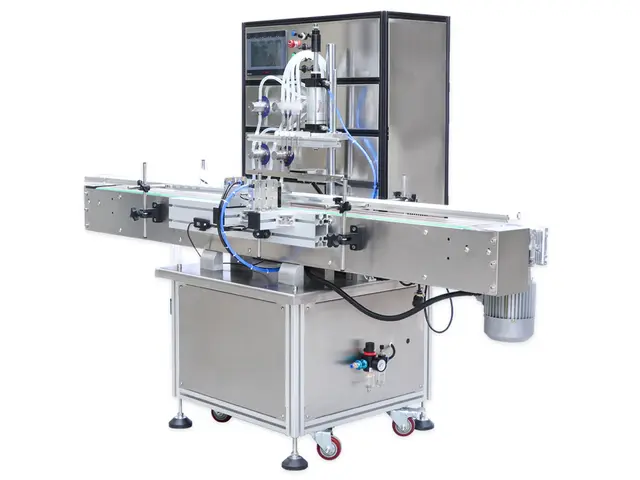
Automatic Gear Pump Filling Machines

Equipped with a gear pump, this liquid filling machine can work automatically. The machine can fill about 30 bottles/min (at 5L). Each filling nozzle of this machine can be cont…

View details

FAQ

Common questions.

What is the best liquid filling machine for my product?

The best machine depends on viscosity, fill volume, container type, accuracy requirement and output target. Lancing can review those details and recommend a suitable method.

Can a liquid filler handle different bottle sizes?

Many systems can be configured for multiple container sizes, but change parts, nozzle settings and conveyor handling need to be checked against the actual containers.

Do I need a semi-automatic or automatic filler?

Semi-automatic machines suit lower-volume or varied production. Fully automatic machines suit higher output, repeatability and integration with capping, labelling and conveyors.

Speak to Lancing

Need help specifying a filling machine?

Tell us the liquid, container, fill range and target output. Lancing will recommend a practical semi-automatic, compact or fully automatic option.

Liquid and pack compatibility

Select the dosing method and container-handling method as one process.

A liquid filler has to deliver the required quantity and leave a pack that can move cleanly to the next operation. Product behaviour controls the pump, piston, flow path and nozzle; pack geometry controls neck access, sensing, stability and transfer. Treating either side in isolation can produce accurate laboratory fills but unreliable production.

The selection should cover the entire operating range. Include the thinnest and thickest product condition, smallest and largest dose, most unstable container and the most demanding changeover. This shows whether one configuration genuinely covers the range or whether separate product-contact sets or machines are more practical.

Flow and metering

Free-flowing products may suit gravity, flow-meter, diaphragm or gear-pump routes. Viscous or particulate products can favour positive-displacement systems with larger passages. Small clean doses may benefit from peristaltic tubing. Each route should be tested under its expected feed condition.

Nozzle behaviour

A nozzle can be a simple open tube, a positive shut-off design, a diving assembly or part of a level-filling process. Select it around opening size, foam, splash, stringing, particles and the need to keep the outside of the pack clean.

Container movement

Manual nests, star wheels, gates, timing screws and tracking conveyors serve different production formats. Test bottle variation, flexible walls, tall packs and full-container stability before fixing guide dimensions and line speed.

Specification and trial evidence

Match liquid behaviour to the engineering questions, not to a label alone.

The same product family can cross several categories as temperature, formulation or fill size changes.

Selection pointWhat to define or testWhy it matters
Water-like, non-foamingCan gravity or a controlled pump fill without splash and stop cleanly?Check head pressure, nozzle size and the effect of changing source level.
Foaming liquidCan flow be profiled and the nozzle kept beneath the rising surface?Assess foam at the required output and after the agreed settling time.
Viscous or stringingCan the product feed consistently and can the nozzle break the product tail?Check temperature, pressure, shut-off, suck-back and residual product.
Liquid with particlesCan the largest particle pass every valve, hose and nozzle without damage?Use representative particle distribution and avoid only testing filtered liquid.
Small high-value doseCan priming, tubing volume and residual product be controlled?Measure yield as well as individual fill results.
Large containerCan the pack be positioned, weighed or filled safely and then removed?Include tare variation, splash, full-pack mass and downstream handling.

Buyer questions

Questions to resolve before the specification is fixed.

Can the same filler handle thin and thick liquids?

Sometimes, but the useful range depends on pump or piston sizing, valves, hosework, nozzle and product supply. Test both ends of the viscosity range at their normal temperature.

How is a bottle filler kept drip-free?

Positive shut-off, suck-back, controlled deceleration, nozzle selection and reducing residual pressure can help. “Drip-free” should be assessed with the actual product after repeated cycles and line stops.

What bottle samples should be supplied?

Provide production-quality samples covering size and manufacturing variation, plus closures and any labels that affect sensing or handling. Include lightweight or unstable variants.

Is fill-by-volume or fill-by-weight better?

Neither is universally better. The choice depends on the commercial measure, density stability, container tare, required accuracy, dose size and production format.

What affects changeover time?

Product drainage, cleaning, hose or tube replacement, nozzle and guide changes, recipes, calibration and verification all contribute. Define changeover from last good pack to first approved pack.

Can the filler connect to capping and labelling equipment?

Yes, provided the pack remains stable and the line includes appropriate accumulation, signals, speed balance and fault handling. Integration should be considered during specification.

From sample to production evidence

Use a staged trial to separate metering, nozzle and handling risks.

A useful filling trial should show not only that the target quantity can be dispensed, but that clean, repeatable packs can be produced through starts, stops, product replenishment and normal container variation.

Begin by fixing the product condition, source arrangement and measurement method. Record temperature, source level, hose route, pump or piston setup, nozzle and container. This creates a reference condition that can be repeated when another dosing method or machine format is compared.

Next, separate the process into metering, discharge and pack movement. A result that appears to be a dosing problem may actually be caused by air entering the feed, an unsuitable nozzle restriction, a bottle moving beneath the head or product remaining under pressure after the stop signal. Testing each stage makes corrective action clearer.

Metering repeatability

Prime the system fully, stabilise the source and measure consecutive fills from every head. Retain individual results rather than only a combined average, because head-to-head variation can reveal trapped air, tube wear, valve restriction or calibration drift.

Clean pack presentation

Inspect the neck, shoulder, label area and conveyor after normal running and after a pause. Foam, strings, delayed drips and splash can appear only after repeated cycles or when residual pressure has had time to act.

Changeover recovery

Time the complete sequence from the last approved pack through drainage, cleaning, product-path changes, priming and calibration to the first approved pack of the next run. This is more useful than quoting cleaning or tool-change time alone.

Production-readiness checkpoints

Fix the operating conditions before the machine layout is approved.

The following record helps turn a promising sample fill into a specification that can be repeated in production.

CheckpointEvidence to retainDecision supported
Product supplyVessel or IBC position, source level range, feed pump, hose size, air exclusion and refill methodConfirms whether the selected metering system receives product consistently throughout the batch.
Commercial measureWhether the pack is controlled by volume, mass or visible level, together with density and temperature conditionsPrevents volume, weight and level expectations being mixed in the acceptance method.
Nozzle pathTop fill, diving fill or following motion; nozzle clearance; shut-off; suck-back; and withdrawal timingControls foam, splash, strings, neck contamination and the time needed for each fill.
Container transportManual nest, gates, conveyor, star wheel or other handling method tested with normal pack variationConfirms that containers remain aligned and stable before, during and after filling.
Cleaning and reassemblyApproved cleaning method, dismantled parts, inspection points, replacement seals or tubes and post-clean verificationShows whether the process can be restored without losing calibration or product compatibility.
Line interfaceSignals, accumulation, speed changes, reject handling and restart sequence for capping, labelling and codingConfirms that the filler can operate as part of the required production system rather than as an isolated station.

Technical guidance

Engineering guides for the complete liquid filling process

Resolve the conditions that sit around the dosing method.

Buyer questions

Questions about the liquid, product path and measured dose

These distinctions help separate a metering issue from a feed, nozzle or pack issue.

What is meant by the product path in a liquid filling machine?

The product path is every component the liquid passes through from the supply point to the nozzle, including pickup, hose, manifold, pump or cylinder, valves, seals and fittings. Its clearances, materials, drain points and accessibility affect compatibility, prime, cleaning and cross-contamination. Ask for the proposed path for the configured machine.

Why is density relevant when the target is set by volume?

Density links volume and mass. A volumetric dose may be checked by weighing, which requires a representative density at a known product condition. Temperature, formulation and entrained air can change that relationship. The machine may still control volume, but the verification record must explain how the measured mass was converted.

What is the difference between a metering problem and a nozzle problem?

A metering problem changes the quantity delivered before or at the end signal; a nozzle problem changes how the delivered product enters or leaves the pack. Drip, stringing, splash and wet necks can occur with a consistent meter. Sequential quantity data and direct nozzle observation help separate the two before settings are changed.

How can a product family be tested without testing every SKU?

Group products by the characteristics that affect filling—viscosity, foam, particles, density, compatibility, temperature behaviour and cleaning—then test the worst credible boundaries. Record why intermediate products are represented by those trials. The range assessment guide explains this matrix approach.

Further selection evidence

Check the operating principle, product range and acceptance method before choosing a platform.

Use the relevant guide to turn a broad machine enquiry into a testable application.

Liquid behaviour

Questions to answer about the liquid before fixing the machine design

A liquid filler should be specified around the product as it reaches the nozzle, not only around a catalogue viscosity or nominal fill volume. The following questions expose conditions that commonly change the design.

When is active temperature control needed?

Active temperature control may be needed when normal ambient variation, product cooling or heating during transfer changes viscosity or fill behaviour enough to affect flow, accuracy, foaming or nozzle shut-off. The requirement should be based on measured production conditions and may involve the source vessel, transfer pipework, pump, manifold or nozzle rather than heating the filler indiscriminately.

Review temperature-control decisions

How is a low-shear filling path confirmed?

A low-shear filling path is confirmed by reviewing the complete product journey, including transfer pump, restrictions, valves, bends, tubing, metering mechanism and nozzle. A gentle filler cannot compensate for an aggressive upstream feed system. Representative trials should compare product condition before and after the full path and record any visible or measurable change that matters to the finished product.

Review shear-sensitive liquid handling

How should residual product be measured?

Residual product should be measured after a defined production and drain-down sequence, with separate records for material that can be recovered, material used for samples or purging, rejected packs and unavoidable waste. The procedure should also state whether the system was allowed to drain, blown through or dismantled, because each method produces a different but valid result.

Plan a product mass balance

What proves that a liquid filling system can be cleaned adequately?

Cleanability is demonstrated by a defined method, not by a general hygienic claim. The buyer should identify product-contact surfaces, dismantling steps, drainability, cleaning chemistry, temperatures, contact times, rinse acceptance and any microbiological or allergen verification needed. The method must reflect the product risk and the way the machine will actually be operated.

Assess hygienic design and cleanability