
Viscosity and cycle time
Many liquids flow more slowly when cooler and more quickly when warmer, changing pressure, nozzle behaviour and achievable cycle time.
Temperature and liquid filling
Temperature can alter viscosity, density, foam, crystallisation, seal behaviour and the time needed to fill a container. Define the approved operating window and keep the source, transfer path and nozzles within it rather than quoting one convenient test temperature.
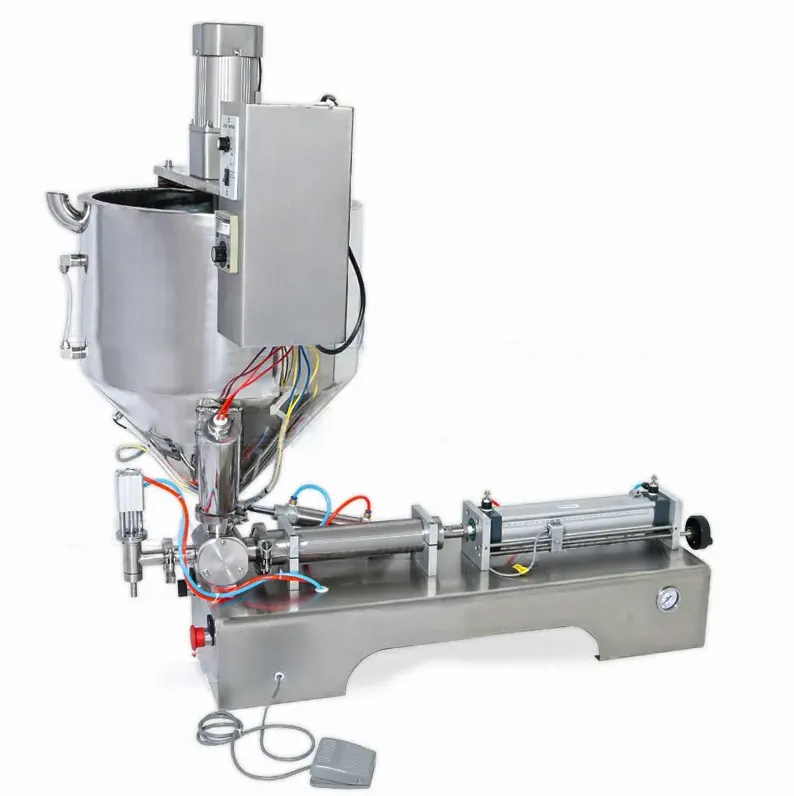
Why temperature matters
Measure it at the points that determine flow and quantity, not only in the upstream manufacturing vessel.
Many liquids flow more slowly when cooler and more quickly when warmer, changing pressure, nozzle behaviour and achievable cycle time.
Where mass and volume are related through density, temperature can affect the conversion and the settled fill level.
Temperature can alter surface behaviour, dissolved gas release and the time needed before a volume or level is assessed.
Some products require a minimum temperature to remain pumpable through hoses, valves and nozzles.
Excess heat or prolonged hold can be unacceptable for the formulation even when it improves flow.
Hoses, seals, guards, hot surfaces and operator access must suit the maximum operating and cleaning temperature.
Temperature-control scope
A heated hopper alone may not keep a long hose, pump or nozzle within the approved window.
| Zone | What to define | What to verify |
|---|---|---|
| Source vessel | Normal batch temperature, permitted hold, agitation, high and low level, and replenishment method. | Uniformity and stability while the filler draws product and the vessel is replenished. |
| Feed pipe or hose | Length, bore, insulation, heating method, bends, stagnant sections and drainability. | Temperature at the pump inlet during start-up, steady run, pause and low flow. |
| Pump or cylinder | Permitted product temperature, heat transfer, seals, clearances and cleaning condition. | Flow, leakage, product quality and temperature rise or loss at the selected duty. |
| Manifold and nozzle | Mass, exposed area, heating, insulation, shut-off design and operator contact risk. | First fills, delayed drip, blocked nozzle risk and consistency across heads. |
| Container | Material, temperature, thermal shock, distortion, headspace and closure timing. | Pack integrity, settled level and safe downstream handling. |
| Control and alarm | Sensor position, setpoint, tolerance, low and high alarm, interlock and restart rule. | Response to an out-of-range condition and evidence that product is not filled outside the approved window. |
Trial matrix
A successful warm sample does not prove cold start-up, replenishment or a production pause.
Shutdown and cleaning
Define whether product is drained, displaced, recirculated, maintained warm or removed from the path. Identify maximum hold time, safe access and the response to power or heater failure.
Cleaning temperature can be higher than production temperature. Confirm hose, seal, pump and sensor compatibility, thermal expansion, drainage and the evidence used to release the line after cleaning.
Questions buyers ask
Not necessarily. Heat can be lost through hoses, pumps, manifolds and nozzles, especially during low flow or pauses. Map and measure the full product path at the intended duty.
Temperature may change viscosity, density, foam and valve or nozzle flow. The same machine setting can therefore produce a different cycle time, in-flight quantity or settled level unless temperature is controlled or the process is recalibrated.
Only when the complete machine, product path, container and operating procedure are suitable for the required temperature. A heated filling capability does not by itself validate the microbiological or preservation process.
Measure where it represents the condition controlling the fill: normally the source and one or more points near the metering or nozzle path. The exact locations depend on heat loss, recirculation and the control objective.
Define whether filling stops, which containers are segregated, who investigates, how product returns to range and what checks release the first packs after restart. Do not rely on an alarm without an approved response.
Provide enough product to test the lowest, normal and highest approved temperatures, including start-up, replenishment and a representative pause. Supply the real containers and the quality limits that heat or cooling must not breach.
Related guides
Define the operating temperature window
Include the source arrangement, transfer length, product samples and containers so the heat-control scope can be reviewed across the complete path.