
Source level and pressure
A falling head or changing regulator can alter flow, priming and valve behaviour. Test near the minimum intended source condition as well as at full level.
Liquid filling machinery guidance
A filler can only repeat the quantity it receives under controlled conditions. Source level, pressure, temperature, entrained air, suction restriction and refill method can all change the behaviour seen at the nozzle.
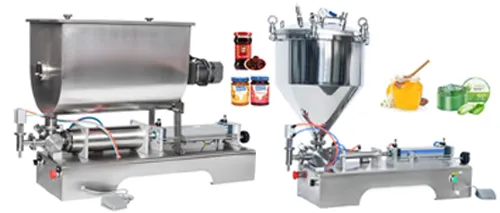
Define the source and operating envelope
A stable source reduces apparent fill variation and difficult restarts.
State whether product arrives from a small hopper, day tank, mixing vessel, pressure vessel, drum, IBC or central process line. Record the normal and minimum liquid level, distance and height difference, connection size, hose route, available pressure and how the source is replenished. These variables affect priming and can change during a batch.
Product properties must be recorded at the filler inlet, not only in a laboratory datasheet. Viscosity can change with temperature and shear; suspended material can settle; foamy products can entrain air during transfer; reactive or volatile liquids can impose additional containment and safety requirements.
Compare feed arrangements
No arrangement is universally best; test the intended batch conditions.
| Feed arrangement | Useful characteristics | Points to verify |
|---|---|---|
| Gravity feed | Simple when adequate static head is available and the product flows freely. | Head variation from full to low level, hose restriction, air entry and drainage. |
| Filler-mounted hopper | Short product path and direct operator visibility for smaller batches. | Safe loading, level control, cleaning, capacity, agitation and manual handling. |
| Transfer or booster pump | Can move product from a remote tank or IBC and maintain supply. | Pump compatibility, pressure control, dry-running protection, shear, pulsation and cleanability. |
| Pressurised vessel | Can support controlled feed for suitable products and processes. | Pressure rating, regulation, relief, cleaning, gas/product interaction and site competence. |
| Recirculating loop | May maintain temperature or solids distribution and provide a common supply. | Return position, shear, heat input, air entrainment, minimum flow and response to line stops. |
| Direct process-line connection | Reduces intermediate handling where a stable upstream service exists. | Interface pressure, isolation, ownership, demand changes and production scheduling. |
Variables that change filling behaviour
A common feed fault often affects every head at roughly the same time.
A falling head or changing regulator can alter flow, priming and valve behaviour. Test near the minimum intended source condition as well as at full level.
Heating, cooling or room conditions may change flow resistance and shut-off. Record product temperature during trials and define any conditioning responsibility.
Loose suction connections, vortexing, vigorous mixing or refill splashing can introduce air. Compressible bubbles can create delayed flow, foam and apparent quantity variation.
Particles or phases may settle, float or concentrate. Define mixing, recirculation, screen size and allowable hold time based on the product process.
Long, narrow or collapsing hoses and blocked strainers can starve a pump. Review route, fittings and clean condition rather than increasing speed to compensate.
A refill can change level, temperature, air content or composition. Include refill events and end-of-batch conditions in the acceptance run.
Product-feed interface checklist
Interface uncertainty should be resolved before layout approval.
| Interface | Information required | Typical decision |
|---|---|---|
| Mechanical connection | Connection type, size, location, hose/pipe specification and support. | Who supplies and installs each part of the route? |
| Product availability | Normal, low and empty conditions; refill method and batch volume. | Does the filler pause, alarm or continue through a buffer? |
| Pressure or level signal | Signal type, set points, fail state and control ownership. | Which system starts/stops the transfer pump or filler? |
| Temperature or mixing | Required operating range and method of control. | Is conditioning part of the vessel, transfer system or filler? |
| Return or recirculation | Flow direction, valve state and line-stop behaviour. | How is pressure controlled when demand changes? |
| Cleaning and drainage | Cleaning boundary, drain point, waste route and disconnection procedure. | Can both systems be cleaned without trapping product at the interface? |
Product-feed questions
Supply conditions should be included in every repeatability or output result.
Gravity head, suction conditions, temperature or solids distribution may change. Test at the lowest intended operating level and define a low-level response.
It may be possible, but connection height, hose route, product viscosity, IBC venting, residual product and refill/changeover method must be reviewed.
A pump may be needed where gravity is insufficient or a controlled supply is required. Its selection depends on product compatibility, flow, pressure, shear, cleanability and control integration.
Splashing, vortexing, loose connections or agitation can entrain air. Allowing time alone may not fix a feed path that continuously introduces air.
That depends on product stability and shear sensitivity. The trial should reproduce the intended mixing/recirculation condition and check whether it changes foam, temperature or quantity.
Continue the specification
Prepare a useful enquiry
Send the source vessel or IBC details, hose route, product temperature, viscosity behaviour, refill method and any mixing or recirculation requirement.