
Product-contact boundary
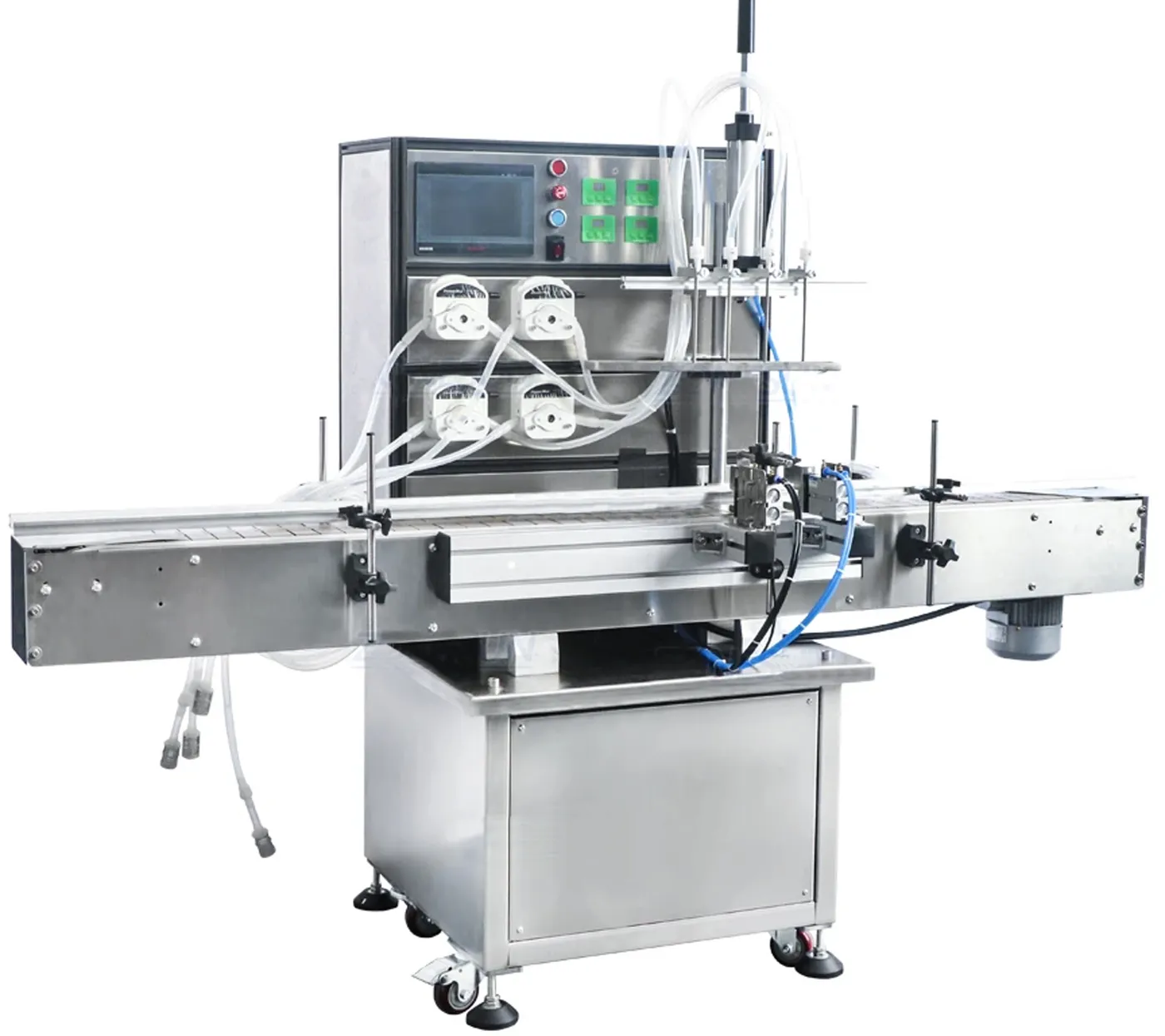
Map every tank, hose, pump element, seal, valve, manifold, nozzle and possible splash return.
Hygienic liquid filling design
A polished frame does not prove that a liquid filling machine is hygienic for a particular product. Review the complete product-contact path, drainage, joints, seals, access, cleaning chemistry, contamination risks and the evidence needed to release the machine between products.
Define the hygiene task
Identify the contamination to remove, the next product and the release criterion before selecting construction details.
Map every tank, hose, pump element, seal, valve, manifold, nozzle and possible splash return.
Consider microbiological growth, allergens, chemical carryover, colour, fragrance, particles and foreign material.
Define manual strip-down, clean-out-of-place, flushing or another approved method and the required access.
Identify low points, dead branches, trapped product, flexible hose loops and components that cannot be inspected.
Confirm metals, polymers, elastomers, hoses and lubricants against product and cleaning conditions.
Define visual, analytical, allergen, microbiological or other checks required by the user's food-safety or quality plan.
Design review
| Area | Questions for the design review | Evidence |
|---|---|---|
| Product path | Can all product-contact surfaces be cleaned, drained, inspected or replaced using the approved method? | Product-path drawing, parts list, cleaning sequence and inspection demonstration. |
| Joints and seals | Are joints appropriate for the duty, assembled consistently and protected from product traps or damage? | Component references, assembly instructions, seal condition criteria and spare parts. |
| Hoses and tubing | Are material, bore, routing, support, bend radius, drainage and replacement frequency defined? | Approved tube or hose specification, routing and change record. |
| Pump and valves | What cavities, clearances, diaphragms, check valves or seals contact product, and how are they cleaned? | Strip-down or cleaning demonstration and inspection points. |
| Nozzles and splash zone | Can the shut-off and external surfaces be cleaned after foam, splash or container contact? | Worst-case filling trial, clean-down and external cleanliness check. |
| Framework and environment | Can the machine exterior, guards, drip trays and floor interface be cleaned without directing contamination into the product path? | Site cleaning method, drainage review and access check. |
Allergen and product changeover
A visually clean line may still require an allergen- or residue-specific verification method.
Food businesses are responsible for suitable food-safety procedures and records. The Food Standards Agency provides HACCP guidance for food businesses. The machine and cleaning method must be assessed within the user's own plan.
Cleanability trial
Questions buyers ask
No. Hygiene depends on the exact product-contact materials, surface condition, joints, drainage, retained product, seals, hoses, cleaning access and verification method. A stainless frame alone does not describe the product path.
It can simplify product contact where the pump acts through replaceable tubing, but the source connection, nozzle, external splash area, tube installation and disposal or cleaning procedure still need to be controlled.
It is a branch or region where product or cleaning fluid does not move and drain as intended. The practical concern is retained residue that may be difficult to clean, inspect or displace.
The food business should use an approved product- and allergen-specific method within its HACCP or quality plan. Define sampling locations, method sensitivity, acceptance criteria, responsibility and records rather than relying only on visual inspection.
The answer depends on product risk, machine geometry, cleaning chemistry, drainage, verification and production needs. Do not describe a process as clean-in-place unless the complete path and method are designed and validated for it.
Provide products, allergens, formulation risks, temperatures, batch sequence, cleaning agents and method, release criteria, required materials, environment, expected changeover and any food-contact or site standard the equipment must meet.
Related hygiene guides
Define the cleaning and release requirement
Include the hardest changeover, verification criteria, materials requirement and representative product so Lancing can review the complete product path.