
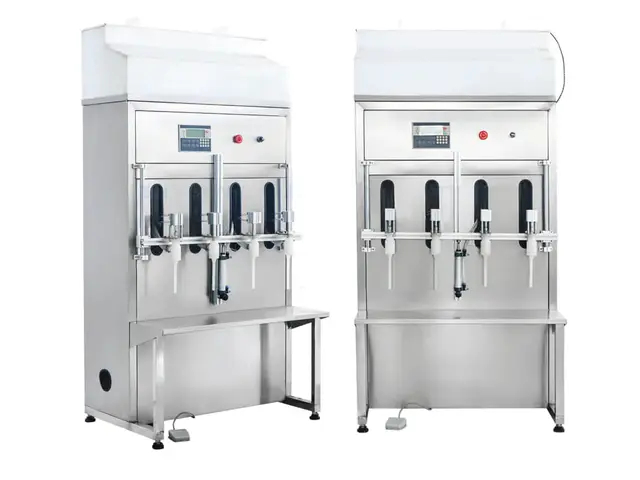
Automatic filling machines
Automatic Anti Corrosion Filling Machine
Automatic gravity filler engineered for corrosive liquids like bleach, acids and fertilizers. Non‑metal wetted parts (PP/PTFE/PVC)…
View detailsAutomatic filling machinery
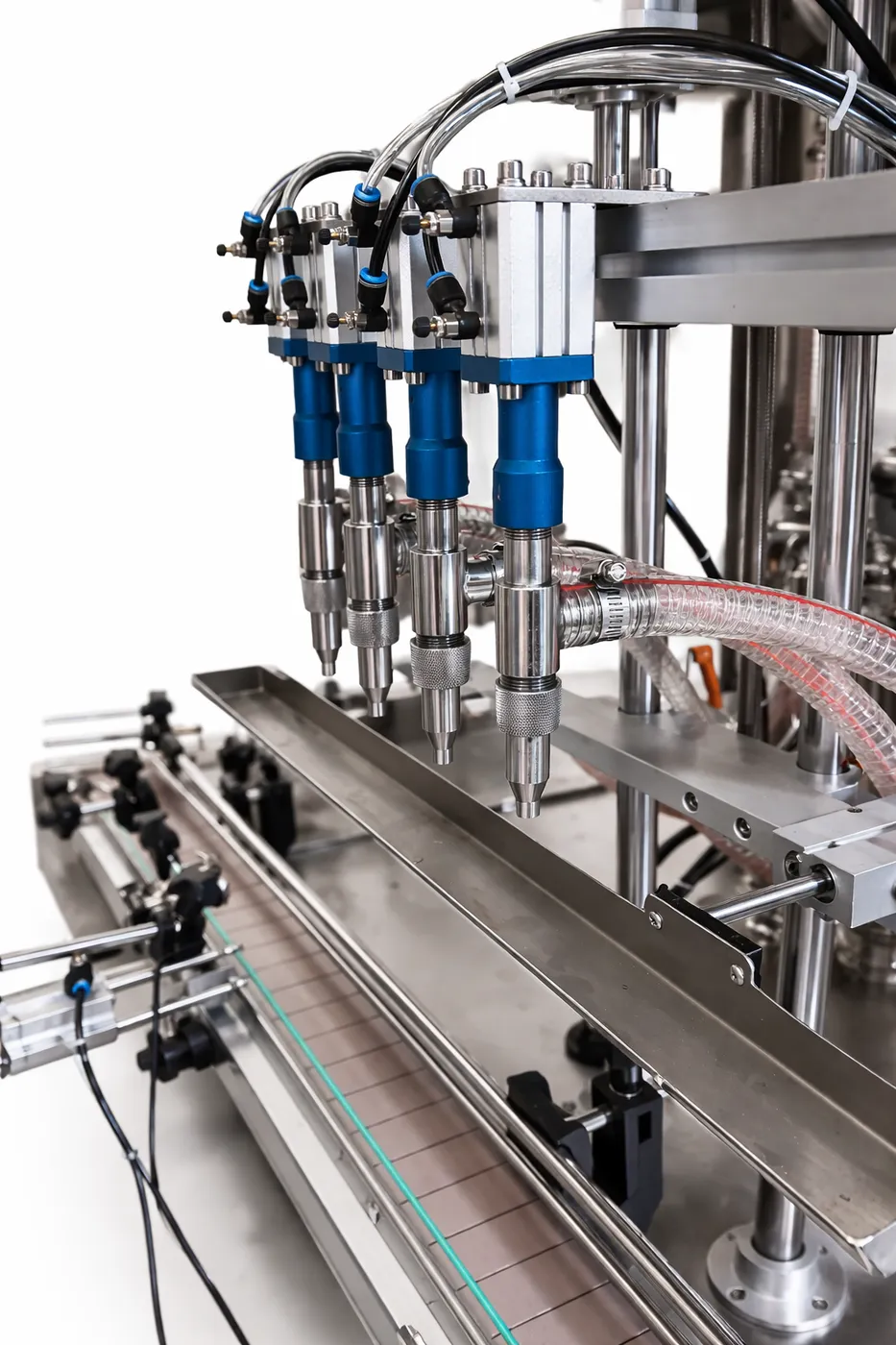
Multi-head fillers with conveyors, bottle detection, HMI controls and options for capping, labelling and line integration.
Automatic machines reduce manual handling, improve repeatability and support consistent line speeds. They are ideal where labour cost, output, fill consistency or integration with cappers and labellers is important.
Automatic range
Automatic filling machines
Automatic gravity filler engineered for corrosive liquids like bleach, acids and fertilizers. Non‑metal wetted parts (PP/PTFE/PVC)…
View details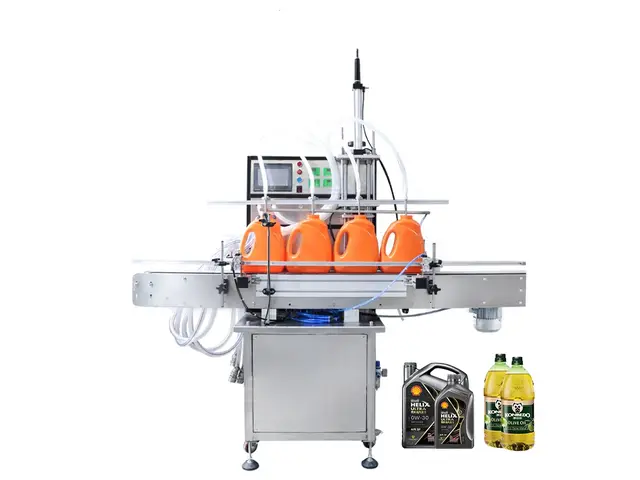
Automatic filling machines
Automatic 4‑head diaphragm‑pump filler for gels, shampoo and detergents. Large 40 L/min flow rate supports ≈30–45 bpm with four…
View details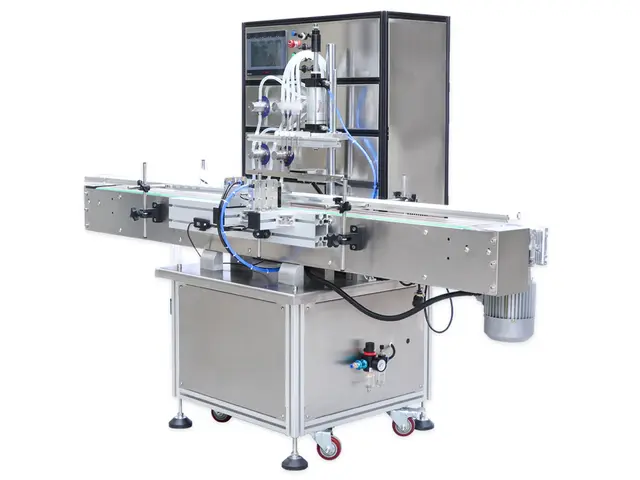
Automatic filling machines
Equipped with a gear pump, this liquid filling machine can work automatically. The machine can fill about 30 bottles/min (at 5L). Each…
View details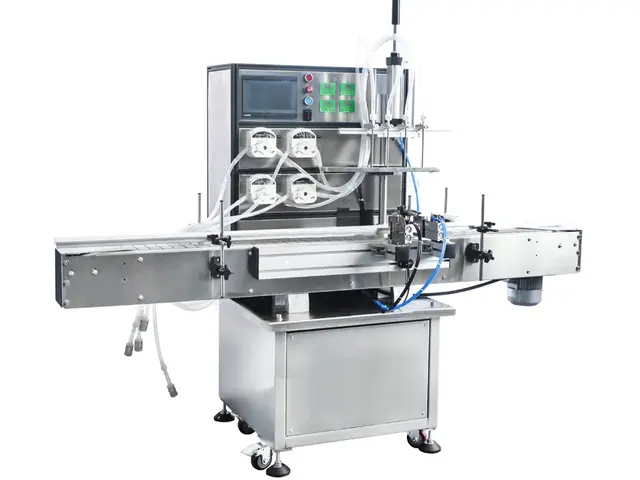
Automatic filling machines
Servo‑controlled peristaltic filler with touch HMI. Dosing volume is set directly on the screen—no need to time the fill. Four…
View details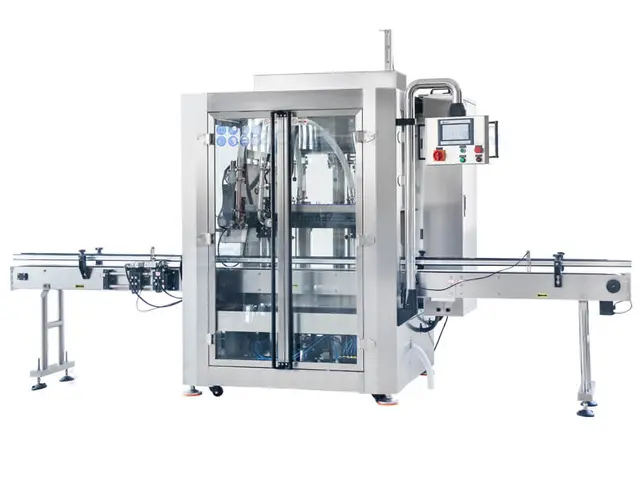
Automatic filling machines
High‑speed servo piston filler with following nozzles that track bottles on the move. Set volume directly on the touchscreen;…
View details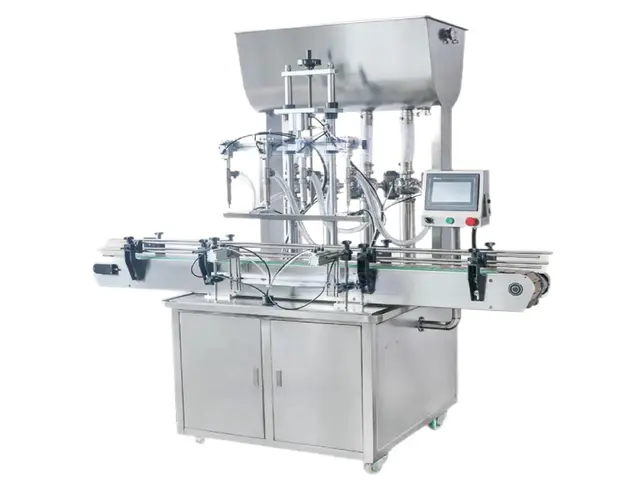
Automatic filling machines
Four‑nozzle automatic piston filler for honey, sauce, cream and lotion. Choose the appropriate cylinder module for your fill size.
View details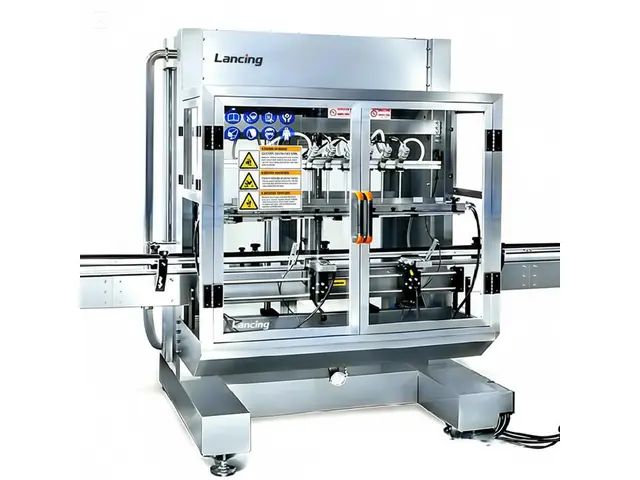
ATEX filling machines
Automatic filling platform engineered for flammable solvents in zoned environments. Explosion‑protected electricals and pneumatic…
View details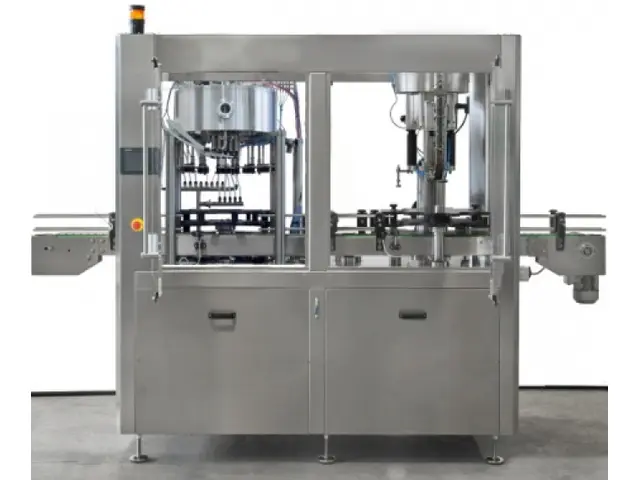
Carbonated drink filling machines
Manufactured for Lancing, GD series constant pressure filler is an advanced level bottle-filling machine which is designed and developed…
View detailsSpeak to Lancing
Tell us the product, fill volume, container and output target. We will recommend a suitable semi-automatic, compact or fully automatic configuration.
Automatic line engineering
An automatic filler must do more than repeat a dose. It has to recognise and control containers, coordinate multiple filling heads, manage product supply and exchange permissive and fault signals with upstream and downstream equipment. The most productive line is usually the one that recovers predictably from routine events such as a missing bottle, cap shortage, label stop or low-product condition.
A line specification should therefore include the operating states as well as normal running. Start-up, priming, recipe selection, planned stop, starved and blocked conditions, emergency stop recovery and batch end all need a clear sequence. This protects fill quality and helps operators restart without creating unfilled, double-filled or unstable packs.
Multi-head output depends on equal product supply, correct calibration and consistent nozzle behaviour. Each head should be checked independently and as part of the combined machine, including after priming, cleaning or replacement of product-contact parts.
Bottle guides, timing screws, gates, sensors or tracking conveyors must control the real container at the intended speed. Lightweight, tall or irregular packs should be tested for spacing, neck position, bounce and recovery after a line stop.
The HMI should present recipes, alarms and recovery steps that match operator responsibilities. Interlocks with cappers, labellers, coders and conveyors should stop the right equipment without losing traceability or creating product spills.
Specification and trial evidence
These questions expose constraints that are easily missed when only the filler is considered.
| Selection point | What to define or test | Why it matters |
|---|---|---|
| Infeed condition | How are containers supplied, spaced and detected, and what variation is expected? | Sets the indexing method and the accumulation required before the filler. |
| Product availability | How is product replenished and what low-level, pressure or temperature conditions stop filling? | Prevents heads becoming starved or drawing air during continuous operation. |
| Head management | How are individual heads calibrated, disabled and verified after maintenance? | Supports consistent multi-head performance and controlled operation after a fault. |
| Line handshake | Which ready, run, starved, blocked, fault and emergency signals are exchanged? | Ensures connected machines stop and restart in a defined sequence. |
| Reject strategy | How are missing, underfilled, uncapped or otherwise suspect packs identified and segregated? | Protects finished-product quality when the line experiences a short disturbance. |
| Changeover | Which recipes, guides, nozzles, hoses, sensors and change parts are required? | Defines realistic downtime and reduces adjustment by trial and error. |
Buyer questions
Head count depends on fill time, indexing time, target good output and the slowest connected operation. More heads do not solve an undersized product feed, slow capping process or unstable container transfer.
A correctly configured system uses container detection and no-bottle-no-fill logic. The precise response depends on the indexing arrangement and whether bottles are processed in groups or tracked individually.
Recipes can store machine settings, but physical compatibility, cleaning, product-contact parts, nozzles and guides still have to be confirmed. A recipe should not be treated as proof that every variant is suitable.
Use representative product and production packs, then assess steady running, planned stops, starved and blocked conditions, restarts, changeover and an agreed sample of fills. Record good packs and reasons for any rejects.
The line control architecture can coordinate connected machines through agreed signals. Responsibility for master control, speed reference, stop categories and fault reset should be documented before commissioning.
Accumulation can prevent a brief downstream stop immediately stopping the filler, or isolate machines with different cycle patterns. The required capacity depends on line speed, expected stoppage duration and pack stability.
Sustainable automatic output
A filler cycle rate is only one part of automatic-line performance. The production measure should include container supply, indexing, fill completion, cap or closure handling, downstream acceptance and recovery from normal interruptions.
Agree the test period and starting state before the run. Record whether the product circuit is already primed, how containers and closures are supplied, who replenishes consumables and which planned stops are included. This prevents a short demonstration run being mistaken for sustainable production output.
Automatic liquid filling also needs a clear control narrative. The sequence should define permissives, no-container/no-fill behaviour, upstream and downstream handshakes, alarm priorities, safe stopping positions and the steps required to resume without creating double fills, empty packs or uncontrolled product discharge.
Confirm that product, containers and any closures arrive at the required rate without starvation, surging or uncontrolled pressure. Include low source level and routine replenishment in the run.
Record actual filling time, indexing, nozzle movement, waiting states, rejected cycles and operator interventions. This shows whether the limiting step is dosing or the process around it.
Count clean, correctly filled packs that pass the next operation. A high filler count is not useful if unstable containers, wet necks or poor spacing reduce capping, labelling or inspection performance.
Automatic-line acceptance record
| Test state | What to observe | Evidence required |
|---|---|---|
| Normal production | Head balance, container spacing, nozzle clearance, fill result and downstream transfer | Consecutive approved packs and the settings used for the complete line. |
| Brief downstream stop | Accumulation, filler inhibit, product pressure and restart spacing | Confirmation that the line resumes without duplicate or missed operations. |
| Product replenishment | Source-level change, entrained air, feed pressure and first fills after refill | Results before and after replenishment under the normal operator method. |
| Container fault | Missing, fallen, doubled or misaligned pack response | Sensor and reject behaviour plus the operator recovery sequence. |
| Planned changeover | Recipe selection, guides, nozzles, product path, cleaning and re-approval | Elapsed time from last good pack to first approved pack and a signed setup record. |
| Power or emergency stop recovery | Machine state, retained product, reference positions and restart permissions | A controlled method that prevents an uncertain container or dose from continuing unnoticed. |
Technical guidance
Prove sustainable operation as a complete system.
Define signals, buffers, rejects, stops and controlled restart.
Read guideTest production packs through infeed, indexing and outfeed.
Read guidePrevent source changes from appearing as dosing faults.
Read guideMeasure good packs, faults, changeovers and site interfaces.
Read guideUse fault patterns and measured evidence to narrow causes.
Read guideBuyer questions
Automatic filling performance is the interaction of metering, handling and the complete line sequence.
Sustainable output is the number of accepted finished packs produced over an agreed representative period, using the real product, pack and operating sequence. It includes container supply, fill completion, transfers and normal recovery, not only the theoretical filler cycle. The good-pack definition establishes what should be counted.
The line may stop because containers are unavailable, incorrectly spaced, not detected, unstable, blocked downstream or rejected by an interlock. Product supply, nozzle movement and transfer timing can also be limiting. A line study should assign each stop to its cause so a fast pump is not mistaken for a fast production system.
Test missing, doubled and incorrectly positioned containers using an agreed safe procedure. Confirm that filling is inhibited when required, that the sequence recovers without an uncontrolled dose, and that rejects are identified and handled within the line scope. Record what is detected by the filler and what depends on upstream or downstream equipment.
Retain recipe and configuration, product and container references, source conditions, head-by-head quantity results, accepted output, rejects by cause, stops, operator interventions and restart packs. Link observations to time or sequence. The record should show both steady operation and the normal events the acceptance plan required the machine to recover from.
Automatic line control
Automatic output depends on coordinated control and reliable recovery from ordinary interruptions. These questions help define what operators, engineers and acceptance tests need to prove.
An automatic filling recipe may include fill target, metering profile, nozzle height or motion, container spacing, delays, drip-control settings and product-feed conditions. Only parameters needed for controlled changeover should be exposed. Recipe naming, permissions and revision control should prevent an operator from loading the wrong format or changing an engineering limit without authorisation.
Stop-and-restart testing should cover container starvation, product-low conditions, guard opening, downstream blockage, emergency stop and loss of a normal line-ready signal. The test should confirm what happens to containers already in the machine, whether partially completed cycles are safely resolved and how the line returns to production without duplicate fills or unfilled packs.
Useful automatic-line data is information that supports operation, quality or maintenance, such as good-pack counts, rejects, alarm history, downtime reasons, recipe identity and critical process values. Collecting every internal signal can create noise. The required data, ownership, interface and retention period should be specified before controls are built.
Automatic-line training should be role based. Operators need safe start-up, changeover, routine checks and fault response; supervisors need recipe and production-control knowledge; maintenance staff need isolation, diagnostics and replacement procedures. Competence should be demonstrated on the supplied line, including abnormal conditions, rather than assumed from attendance at a general presentation.