
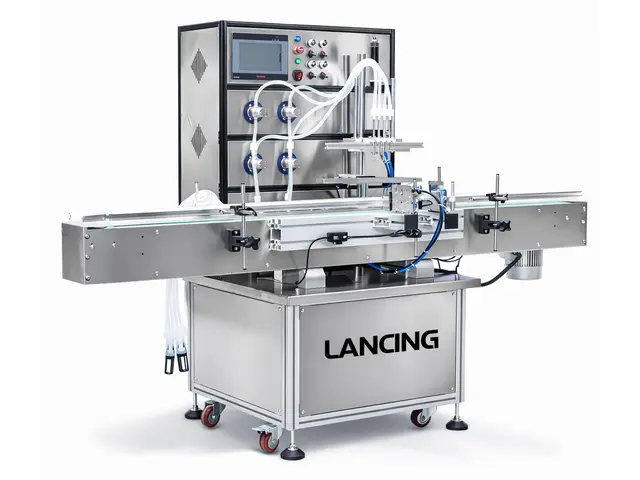
Liquid fillers
Filling systems for free-flowing liquids, foamy products and high-value small doses.
View productsFilling machinery guide
The best filler depends on viscosity, foaming, solids, container size, fill accuracy, hygiene, hazardous area classification and required output.
Filling methods
Use this as a starting point. Lancing can review samples and containers to confirm the final configuration.
| Peristaltic filling | High-value, hygienic or small-dose liquids where the product should only contact tubing. Essential oils, fragrance, lab liquids, small bottles |
|---|---|
| Piston / volumetric filling | Accurate measured doses for low-to-high viscosity products. Sauces, creams, shampoo, gels, honey |
| Gear pump filling | Fast, controllable liquid filling for oils and thicker liquids. Lubricants, edible oils, detergents |
| Diaphragm pump filling | Foamy or viscous liquids requiring a robust pump system. Shampoo, detergents, gels |
| Weigh filling | Large-volume containers or products where weight control is preferred. Buckets, jerrycans, oils, chemicals |
| Counter-pressure filling | Carbonated liquids that need pressure maintained during filling. Beer, sparkling drinks, soda, RTD cans |
| ATEX / hazardous filling | Flammable solvents or zoned environments requiring appropriate risk assessment. Solvents, alcohol bases, perfumes |
Range
Filling systems for free-flowing liquids, foamy products and high-value small doses.
View products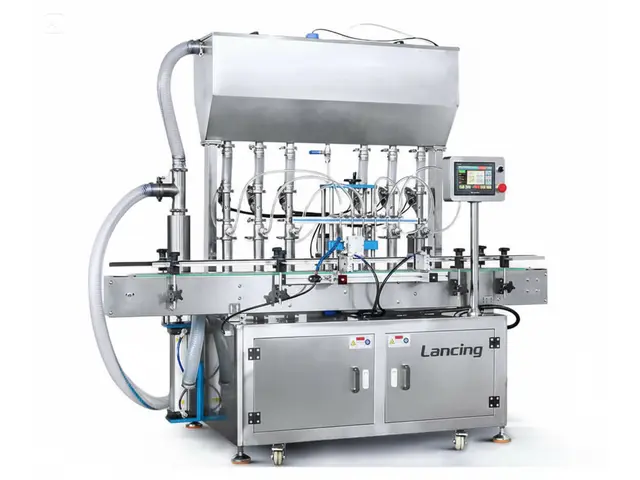
Piston, rotor-lobe and heated hopper options for creams, sauces, gels and adhesives.
View products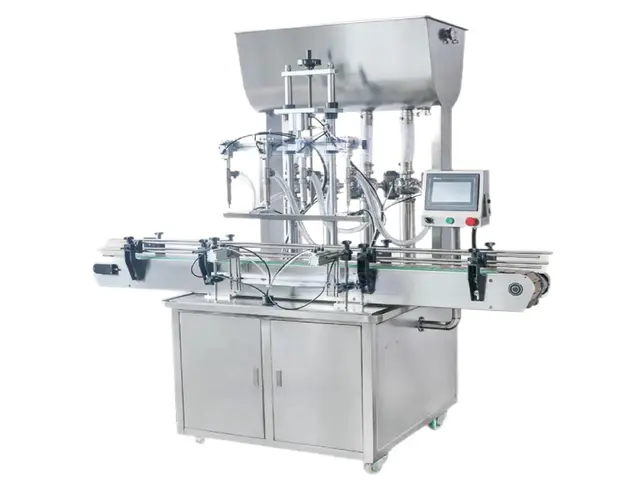
Integrated conveyors, sensors, HMI controls and multi-head filling for production throughput.
View products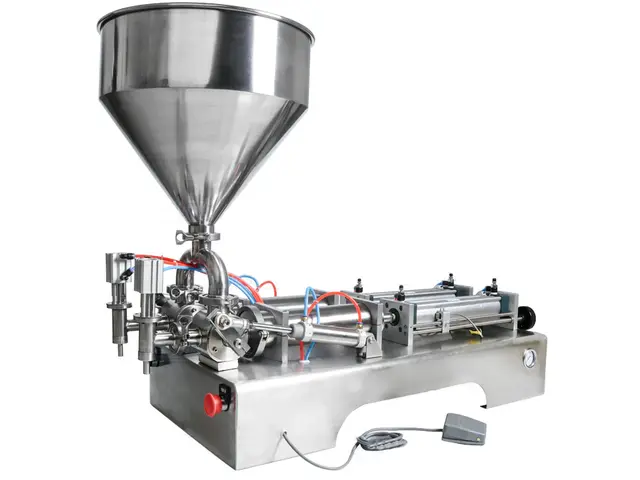
Accurate, cost-effective systems for growing production without full line automation.
View products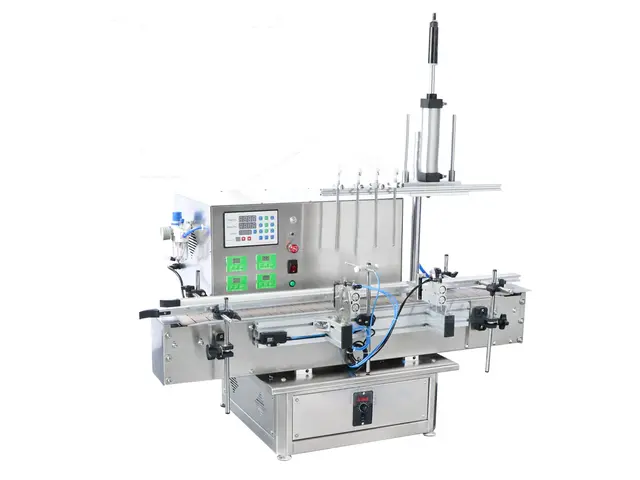
Space-saving peristaltic and volumetric fillers for small batches and frequent changeover.
View products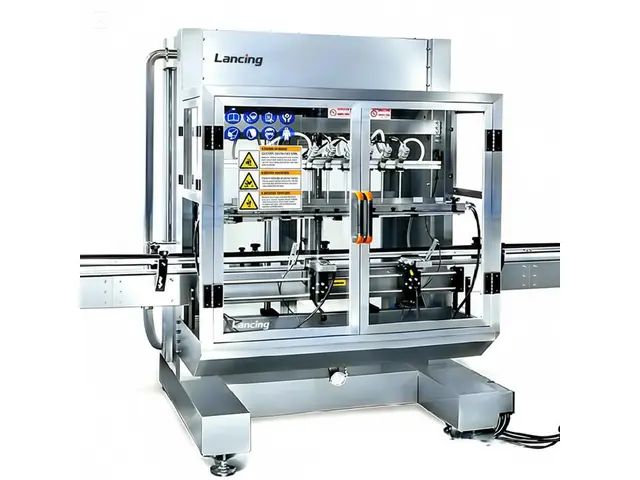
Material compatibility and hazardous area considerations for solvents and aggressive liquids.
View productsLine integration
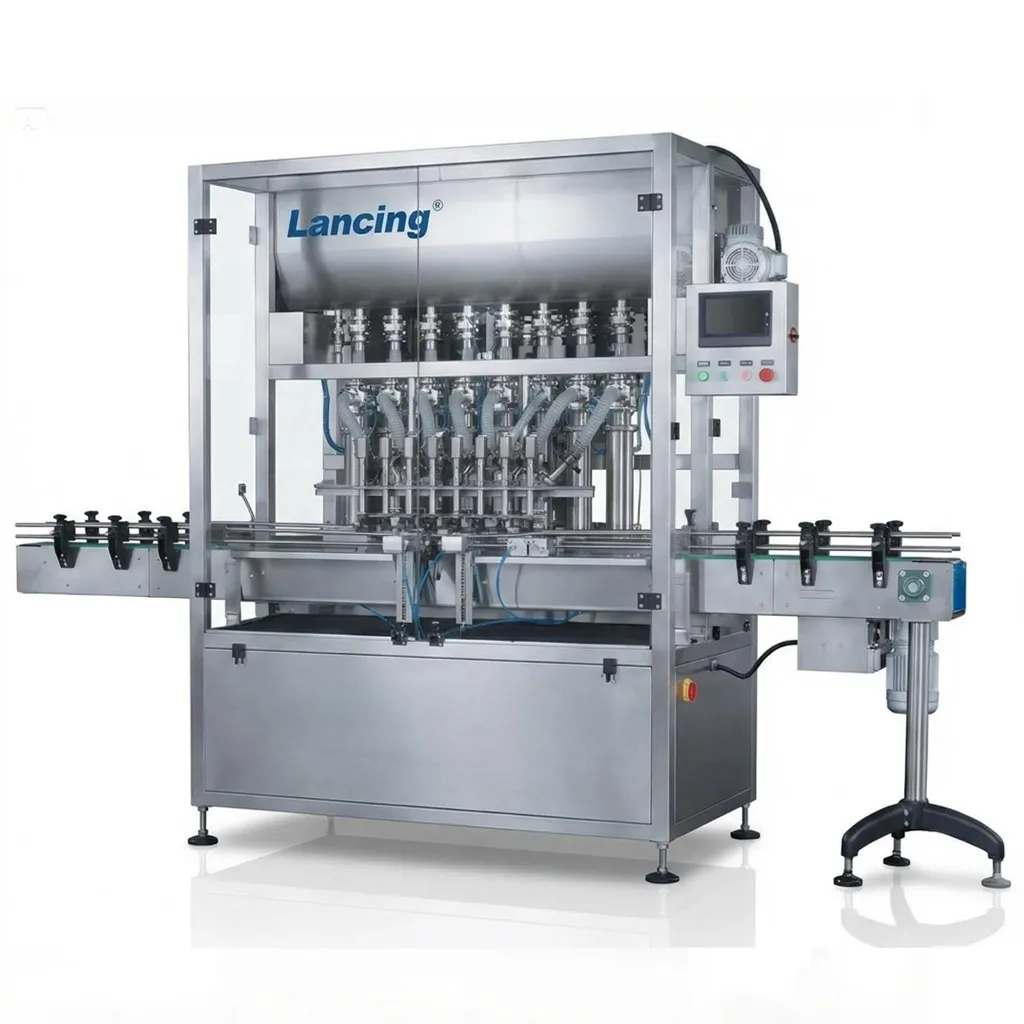
Lancing can supply filling machinery as standalone equipment or as part of a complete line with conveyors, rinsing, feeding, capping, labelling, coding, sealing, shrink wrapping and end-of-line packing.
This approach gives one specification process, more consistent line speed planning and fewer integration issues during installation.
FAQ
Semi-automatic filling suits lower volumes, frequent changeovers and controlled budgets. Automatic filling is usually preferred when throughput, labour reduction and line consistency are priorities.
Many machines can be adjusted for several containers and fill volumes. The correct answer depends on the bottle dimensions, fill range and changeover requirements.
Yes. Lancing supplies filling, capping, labelling and packaging systems, from standalone machines to complete automated lines.
Corrosive products require compatible wetted parts. Flammable products may require ATEX or hazardous-area review. Share the SDS and site information before specification.
Speak to Lancing
Tell us the product, fill volume, container and output target. We will recommend a suitable semi-automatic, compact or fully automatic configuration.
From liquid sample to line acceptance
A filling machine is a controlled sequence: product is supplied to the metering device, measured or displaced, delivered through a nozzle and stopped cleanly while a container is held in the correct position. Variation can enter at every stage. Feed pressure, air pockets, temperature, valve response, nozzle shut-off and container movement can all affect the finished pack even when the programmed dose has not changed.
A useful specification therefore records the full process and the method of acceptance. It should say how product reaches the machine, how containers arrive, what the nozzle does during the fill, how the dose is checked and what happens during a fault or product change. This makes technology comparisons more meaningful and creates a clear basis for a sample trial or factory acceptance test.
State whether product comes from a hopper, vessel, drum, IBC or pumped ring main. Suction lift, hose diameter, head pressure, agitation and refill method can change flow and introduce air. Priming and low-product behaviour should be part of the operating sequence.
The nozzle may remain above the neck, dive before filling or follow the rising liquid level. The correct method depends on foam, splash, stringing and pack geometry. Bottle presence, no-bottle-no-fill logic and anti-collision arrangements should be confirmed.
Agree whether fills are checked by calibrated scales, volume or visible level, and define sample size, warm-up, product temperature and permitted variation. Record start-up, steady production and end-of-batch behaviour separately where they differ.
Specification and trial evidence
Without shared test conditions, two fillers can appear different when the real difference is product state, feed pressure or measurement method.
| Selection point | What to define or test | Why it matters |
|---|---|---|
| Product condition | Identity, batch, temperature, viscosity, density, agitation and time since mixing | Keeps the liquid entering each test comparable. |
| Product feed | Source vessel, level, hose route, pressure, pump assistance and refill point | Controls suction conditions and prevents unrecorded head-pressure changes. |
| Dose setup | Target, recipe, pump speed or piston setting, acceleration profile and nozzle timing | Provides a repeatable machine configuration and traceable adjustments. |
| Container sample | Production pack, neck variation, tare where weighing, and agreed presentation method | Prevents laboratory packs or manual positioning masking handling issues. |
| Measurement | Instrument, calibration status, density conversion if used, sample count and calculation method | Separates measurement uncertainty from machine variation. |
| Output result | Good packs, rejects, stoppages, refill time, cleaning and changeover within the stated period | Shows usable production rather than theoretical filling cycles. |
Buyer questions
Accuracy describes closeness to the agreed target; repeatability describes how tightly repeated fills group together. A machine may repeat consistently but require calibration to move the average onto target. Both should be measured using an agreed instrument and sample method.
Temperature can alter viscosity, density, surface tension and foaming. It can therefore change pump load, flow rate, drip behaviour and a volume-to-weight conversion. Record the normal and worst-case filling temperatures.
Residual pressure, product elasticity, nozzle geometry, valve response, stringing and pump deceleration can all contribute. Shut-off valves, suck-back, controlled deceleration or a different nozzle can help, but the product should be trialled.
Common approaches include lower initial flow, bottom-up filling, keeping the nozzle below the liquid surface, suitable nozzle diameter and reducing air entering the product supply. The best profile depends on the actual liquid and pack.
Identify what must be removed, the cleaning agent and temperature, required disassembly, acceptable residual product, rinse verification and changeover time. A hygienic requirement should be translated into an observable procedure.
Not reliably. Pump rate is only one part of the cycle. Indexing, nozzle movement, fill volume, container spacing, capping, labelling, faults and replenishment all affect good finished output.
Technical guidance
Follow the evidence path from samples to site acceptance.
Prove product, dose, nozzle and pack handling under recorded conditions.
Read guideDefine the source vessel, pressure, level, temperature and refill method.
Read guideControl sensing, indexing, guide contact and transfers for the full pack range.
Read guideCoordinate upstream supply, downstream machinery and fault recovery.
Read guideAgree measurable evidence, responsibilities and deviation handling.
Read guideBuyer questions
The machine, product supply, pack handling and acceptance method need one common boundary.
A complete specification identifies the products and their operating conditions, fill quantities, containers, required pack result, product feed, metering principle, nozzles, handling, cleaning, utilities, interfaces, documentation and acceptance method. It also records exclusions and responsibilities. Use the URS guide to make those points testable.
The meter can only repeat when it receives a stable, representative supply. Source level, lift, hose bore, pressure, temperature, mixing, refill and air entry can all change the product entering the meter. Product-feed conditions should therefore be included in trials and the line scope rather than treated as unrelated upstream equipment.
Normal variation in height, base shape, wall stiffness, neck position and opening can change sensing, stability and nozzle alignment. Handling should be designed and trialled around representative production samples, not one ideal bottle. The container handling guide sets out the main checks.
A good pack should meet all agreed conditions: quantity, neck and exterior cleanliness, no handling damage, correct orientation and downstream acceptance where those operations are in scope. Define the test before the run and record rejects by cause. See good-pack acceptance.
Evidence before specification
The following resources support a technology decision without treating a catalogue image as the final specification.
Review real filling stations, visible transcripts and the application points that remain subject to trial.
Compare line boundaries, product ranges, changeovers, tests and acceptance evidence.
Review product supply, large containers, utilities, materials and complete-line interfaces.
Engineering decisions
Metering technology is only one part of a filling system. Product condition, fluid-path design, controls, maintenance access and acceptance evidence determine whether the selected equipment will perform consistently in production.
Shear sensitivity and temperature can alter viscosity, texture, aeration, flow and shut-off behaviour, so they should be assessed together. The preferred metering method must handle the product at its realistic minimum, normal and maximum conditions. A trial should reproduce the intended feed path and temperature history rather than assessing only a small room-temperature sample.
Control requirements should define recipe parameters, operator permissions, alarms, product-low conditions, container-present logic, line handshakes and restart behaviour after a stop. Where data is required, the buyer should state which values and events need recording, how long they must be retained and whether the filler must exchange information with other line equipment.
Maintenance planning should identify routine inspection points, product-contact wear items, recommended spares, safe isolation needs, access for cleaning and service, and the information required when requesting support. The final scope should distinguish operator checks from competent maintenance work and confirm how parts are identified for the exact supplied configuration.
Product loss should be assessed as a mass-balance question: product supplied to the process should be reconciled with good filled packs, samples, purges, rejects, recoverable residual product and unrecoverable waste. The method should state when the system is considered full, how start-up and end-of-batch material are treated, and whether recovered product can legally and safely be reused.