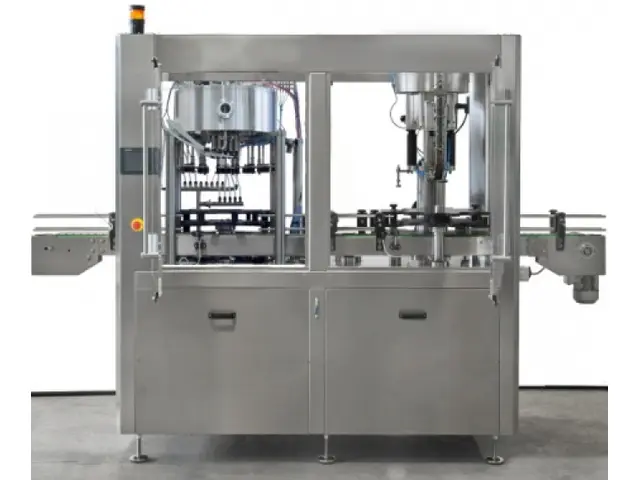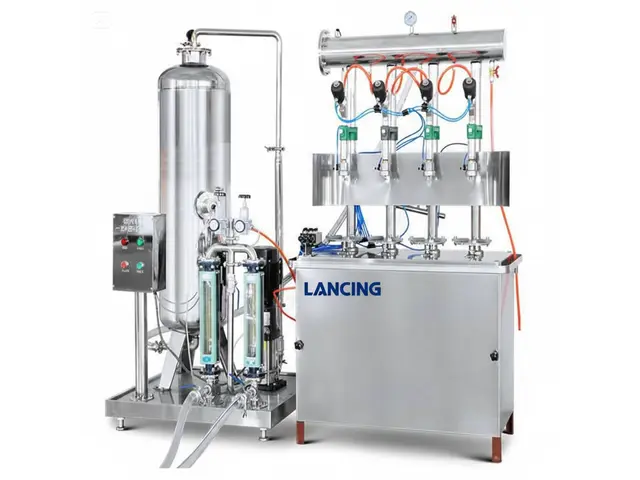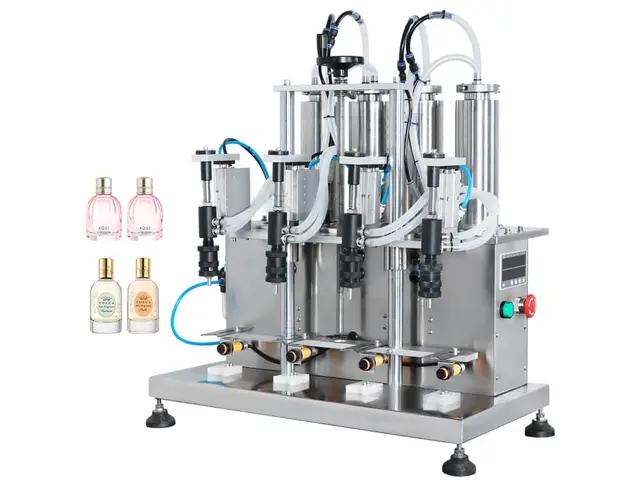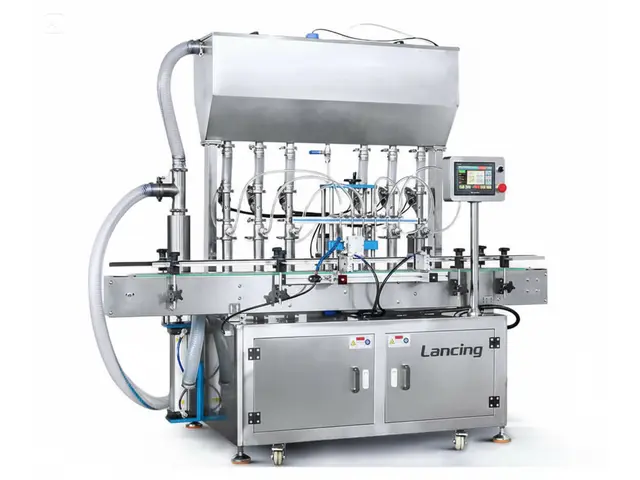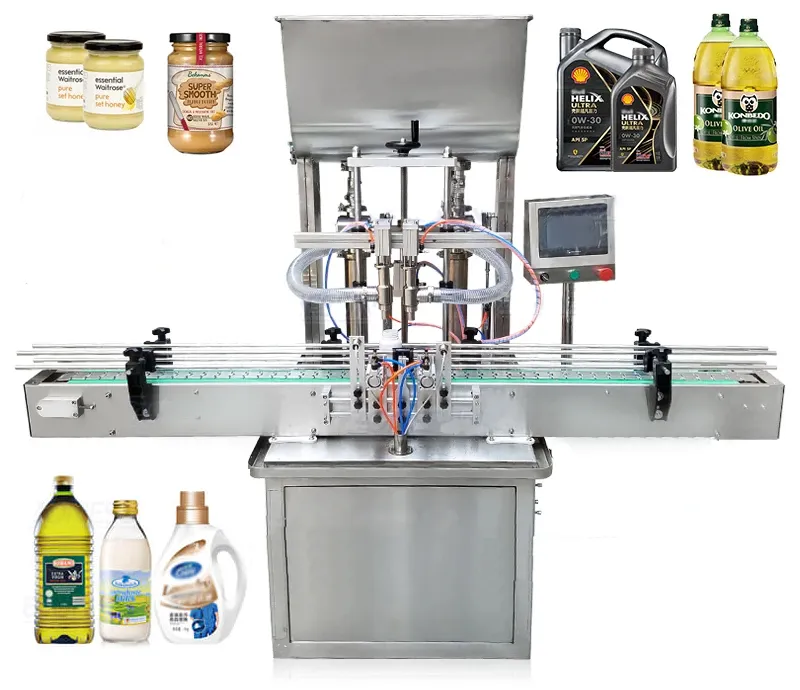
Food and drink filling machines

Food and drink filling machines for sauces, oils, honey and beverages.

Food and drink filling applications can involve thin liquids, sticky products, particulates, foam, heat and strict clean-down routines. Lancing can help match the filling method to the product and container.

Food and drink filling machines for sauces, oils, honey and beverages.

Specification guide

How to choose the right system.

These notes are written for buyers comparing filling machinery options before requesting a quotation.

Sauces, oils and sticky products

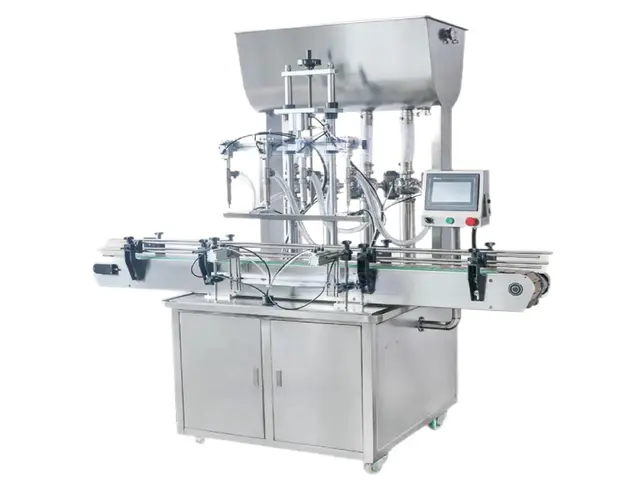
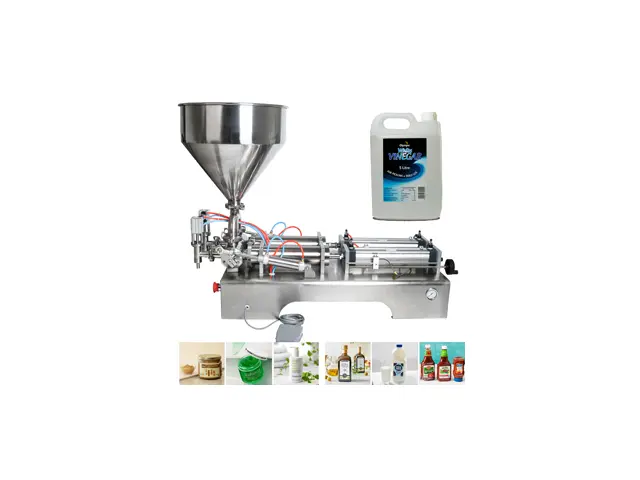
Cooking oils, sauces, honey, syrups and condiments each need a different filling approach. Viscosity, stringing, temperature and clean-down requirements influence whether a piston, volumetric, gear pump or other filling method is most suitable.
Beverages and foaming liquids

Still beverages can use standard liquid filling approaches, while carbonated products normally need counter-pressure or isobaric filling. Foamy products may require bottom-up filling or slower fill profiles.

Hygiene and cleaning

Food applications need appropriate contact materials, accessible components and a cleaning method that fits the product. The correct setup should be discussed before purchase rather than added later.

Key considerations

What affects the machine specification?

Sauces and condiments

Piston and volumetric systems suit many thicker food liquids.

Oils and syrups

Pump-based or volumetric filling can suit oils and sticky liquids.

Carbonated drinks

Counter-pressure filling is used for sparkling and carbonated beverages.

Container flexibility

Bottles, jars, pouches and buckets can be reviewed depending on the application.

Relevant machines

Lancing filling machinery to review.

View all products
Semi Automatic Volumetric Filling Machines product image

Semi-automatic filling machines

Semi Automatic Volumetric Filling Machines

The semi-automatic system offers separate machines each requiring manual product placement but still affording a very significant improvement in production rates compared to manual…

View details
Semi Automatic Vacuum Filling Machines product image

Semi-automatic filling machines

Semi Automatic Vacuum Filling Machines

Overflow Vacuum Fillers are designed to fill to a level rather than to dispence a specific volume of liquid. Ideal for applications with inconistent glass bottles where the level a…

View details
Paste Filling Machinery product image

Paste and viscous filling machines

Paste Filling Machinery

Paste and viscous liquid filling machinery for creams, gels, sauces, honey, cosmetics, adhesives and thick household products.

View details

FAQ

Common questions.

What filler is best for sauce?

Many sauces suit piston, volumetric or heated hopper filling depending on viscosity, particulates and temperature.

Can carbonated drinks be filled on standard liquid fillers?

Carbonated products normally need counter-pressure or isobaric filling rather than a standard open liquid filler.

Can one food filler handle jars and bottles?

Possibly, but container size, neck access, stability and cleaning requirements need to be checked.

Speak to Lancing

Need help specifying a filling machine?

Tell us the liquid, container, fill range and target output. Lancing will recommend a practical semi-automatic, compact or fully automatic option.

Technical guidance

Food and drink project evidence

Connect cleanability, product contact and quantity checks.

Food and drink applications

Questions that define hygienic and repeatable food-liquid filling

Food and drink projects need application-specific evidence for cleanability, product condition, quantity control and the treatment of recovered material. A generic sanitary description is not enough.

What hygienic-design evidence should a food-filling buyer request?

A food-filling buyer should request a defined product-contact boundary, materials information, cleaning method, dismantling sequence, drainability review and access for inspection. The required verification may include visual, chemical, allergen or microbiological checks depending on the product and food-safety plan. Final suitability remains part of the operator’s application-specific hazard assessment.

Review hygienic-design evidence

How should allergen changeover be considered?

Allergen changeover should begin with the site’s hazard analysis and define the product-contact parts, cleaning chemistry, mechanical action, time, temperature, rinse and verification method. A quick rinse should not be assumed adequate. Product samples, worst-case residues and parts that trap material should be considered when the cleaning trial is designed.

Plan cleaning and changeover

Why is product temperature important in food filling?

Product temperature can affect viscosity, foaming, particle suspension, fill behaviour and food-safety controls. The machine trial should cover the real temperature at the filler, not only the preparation vessel temperature. Where product cools in transfer lines or during a batch, the minimum and end-of-batch conditions may be the most demanding.

Assess temperature through the process

Can recovered food product be returned to the batch?

Recovered food product can only be returned where the site’s food-safety, traceability and quality controls permit it. The recovery method must avoid contamination and uncontrolled mixing, and the decision should be defined before acceptance testing. Material that cannot be safely identified and controlled should be treated as waste rather than assumed reusable.

Plan controlled product recovery