
Product behaviour
Viscosity, foam, particles, temperature and chemical compatibility.
Support and planning guides
Ongoing support matters when a filling machine is part of daily production. Clear documentation, spares, setup knowledge and practical troubleshooting help reduce downtime.
Buyer intent guide
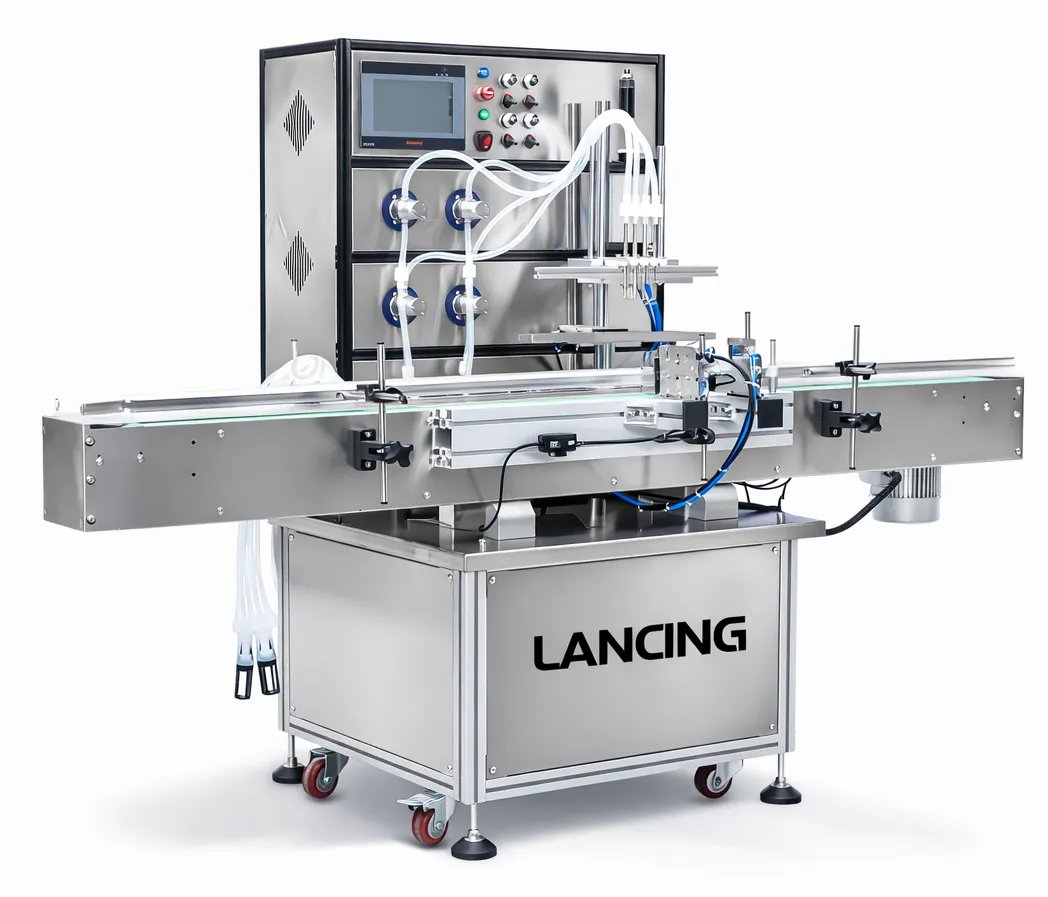
The right filling machinery recommendation comes from the product, container and output target together. Lancing can compare semi-automatic, compact and fully automatic options once those details are clear.
Viscosity, foam, particles, temperature and chemical compatibility.
Bottle, jar, pail or jerrycan size, neck opening, stability and closure.
Fill volume or weight, accuracy tolerance and required bottles or packs per minute.
Manual loading, semi-automatic operation, compact automation or full inline production.
Specification notes
These points help make an enquiry more accurate and reduce the risk of selecting the wrong filling principle.
The same bottle filling machine can perform very differently when the liquid changes. A water-thin cleaner, a foaming detergent, a viscous sauce, a fragrance oil and a corrosive chemical each create different challenges. Product behaviour drives pump selection, nozzle design, materials and speed.
For a strong recommendation, include the product type, approximate viscosity, whether it foams or strings, whether it contains particles and whether it needs heating, mixing or special materials.
Filling speed should be balanced with capping, labelling, operator loading and packing. A fast filler does not improve the line if bottles cannot be presented, capped or labelled at the same rate.
For growing production, Lancing can discuss a sensible route from semi-automatic equipment to compact automation or a fully automatic filling line.
Relevant machinery
These product pages are useful starting points when discussing filling machine service support UK.
Relevant Lancing machinery to discuss when specifying filling machine service support UK projects.
View productRelevant Lancing machinery to discuss when specifying filling machine service support UK projects.
View productRelevant Lancing machinery to discuss when specifying filling machine service support UK projects.
View productRelevant Lancing machinery to discuss when specifying filling machine service support UK projects.
View productFAQs
Provide the machine identity and configuration, product and pack, settings, alarm text and sequence leading to the fault. Include recent changes, whether production is stopped and checks already completed. Add photographs or video only where safe.
Use the exact machine build and the consequence of downtime. Product-contact materials, dimensions, electrical ratings and sensor types must match the supplied configuration. Distinguish routine wear parts from components whose lead time or failure would justify holding stock.
Combine supplier guidance with operating hours or cycles, product and cleaning duty, environment and inspection evidence. Record any interval changes. The absence of a failure alone is not a sufficient basis for extending safety-critical or product-contact maintenance.
Related guides
Need a recommendation?
Lancing will recommend a suitable semi-automatic, compact or fully automatic filling solution.
Technical guidance
Use consistent fault, maintenance and changeover records.
Record symptoms, operating state, head, recipe and safe media.
Read guideControl dismantling, inspection, reassembly and restart.
Read guideAssess maintenance access, isolation and modifications.
Read guideRetain acceptance evidence as the baseline for later diagnosis.
Read guideService readiness
Accurate machine identification, a clear fault history and safe access allow technical support to distinguish a process issue from a component failure and prepare the right response.
A useful support request should include the machine identity, supplied configuration, product and pack being run, recipe or settings, recent changes, alarm text, sequence leading to the fault and clear photographs or video where safe. It should also state whether production is stopped and what troubleshooting has already been completed so work is not duplicated.
Critical spares should be selected from the exact machine build and risk of downtime, not from a generic list. Product-contact materials, sizes, electrical ratings and sensor types must match the supplied configuration. The list should distinguish planned wear items from low-frequency components whose long replacement lead or production consequence justifies holding stock.
A suitable maintenance interval combines supplier guidance with actual cycles, hours, product abrasiveness or chemical exposure, cleaning frequency, environment and inspection evidence. Early inspections can be used to refine the interval, but changes should be controlled and documented. Safety-critical or product-contact items should not be extended solely because no failure has yet occurred.
Training records should identify the machine, role, topics covered, trainer, date and evidence of practical competence. Refresher or reassessment triggers should include major changeover, control changes, repeated errors, long absence or a relevant incident. Records should not imply that an operator is authorised for maintenance tasks outside the defined role.