Liquid filling machinery guidance

Turn the machine specification into measurable FAT and SAT evidence.

Factory acceptance testing and site acceptance testing work best when the pass criteria, samples, responsibilities and evidence are agreed before the test date—not improvised beside the machine.

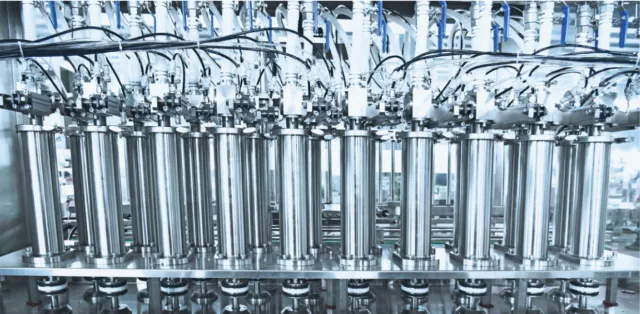
Multi-head liquid filling machine arranged for production and acceptance testing

Two tests, different purposes

Separate factory proof from installed-site proof.

A successful FAT reduces site risk, but it cannot prove site conditions that were not present at the factory.

Factory acceptance test (FAT)

The FAT checks the agreed machine build and functions before dispatch. It can demonstrate controls, guarding, format handling, dosing behaviour, alarms, documentation and an agreed product or test-medium run within the facilities available at the factory.

Site acceptance test (SAT)

The SAT checks the installed system in its production environment. It should address site utilities, actual interfaces, production product supply, upstream and downstream equipment, operator access, fault recovery and the agreed operating period after installation.

Build an acceptance matrix

Give every requirement an owner, method and record.

Use one controlled matrix rather than separate informal notes.

Acceptance areaFactory evidenceSite evidence
Build and scopeMachine configuration, options, format parts and agreed documentation checked against the order.Delivered scope, installation position and interfaces checked against the approved layout.
Safety functionsGuards, interlocks, emergency stops and controlled restart demonstrated within the agreed machine scope.Site risk controls, access, line interfaces, isolation and local procedures confirmed by the responsible parties.
Product and pack handlingRepresentative samples run to prove basic compatibility and change parts.Normal production supply and actual pack variation run through the installed line.
Fill quantityAgreed sample method used for each relevant head, recipe and operating condition.Quantity-control method repeated after installation with site instruments and production product.
OutputTimed run under defined factory conditions, with stops and rejects recorded.Good finished packs measured through the integrated line over the agreed site period.
Changeover and cleaningFormat change, wet-side access and cleaning sequence demonstrated where included.Site procedure completed by trained personnel with actual services and disposal arrangements.
Fault and recoverySelected sensors, alarms, low-product conditions and restart logic demonstrated safely.Upstream/downstream stops, accumulation and recovery checked across the complete line.
Documentation and trainingManuals, drawings, declarations and initial records reviewed as applicable.Installation records, training attendance, outstanding actions and handover status recorded.

Prepare the test pack

Samples and instruments determine what can be proved.

The test should represent the intended operating envelope without pretending to cover conditions that were not supplied.

Representative liquid

Supply the actual product where practical, including the most difficult viscosity, foam, particles, temperature or chemical condition within the intended range.

Production containers

Provide normal production packs and known variation, not only selected perfect samples. Include closures where the line extends beyond filling.

Defined targets

State each fill target, tolerance, recipe, product condition and method of measurement. Separate net quantity from visual fill level.

Suitable instruments

Identify scales, gauges, timers and reference devices, their resolution and calibration status, and who records the results.

Test sequence

Agree priming, warm-up, sample size, head coverage, timed-run duration, planned stops, changeovers and restart checks.

Disposition rules

Decide how deviations, concessions, retests and incomplete items will be recorded and authorised.

Control deviations and actions

A failed point needs a traceable decision, not an argument at the end of the day.

Clear deviation handling protects both buyer and supplier.

Number each acceptance point and record pass, fail, not tested or not applicable. A “not tested” result should state why and where the requirement will be proved. Photographs, data files and signed test sheets should be linked to the relevant point rather than stored as an unstructured folder.

When a deviation is found, record the observed condition, expected condition, agreed correction, owner and due date. State whether dispatch or production release is affected. Retesting should use the same defined method unless the acceptance criterion is formally changed.

Acceptance questions

Buyer questions before booking the test.

Use the same definitions in the quotation, test protocol and handover record.

What should be agreed before FAT?

The machine scope, samples, product quantity, test media, targets, sample plan, timed-run method, safety demonstrations, documentation, attendees and rules for deviations should be written down.

Can water be used instead of the production liquid?

Water can prove selected mechanical and control functions, but it does not represent a different product’s viscosity, foam, lubrication, chemistry, particles or cleaning behaviour. Any limitation should be recorded.

How is output tested fairly?

Define good finished packs, the start and finish points, planned stops, refill method, operator tasks and whether downstream equipment is present. Record rejects and downtime rather than quoting only a peak cycle.

Should every filling head be checked?

The plan should cover each relevant head and operating state. The sample size and sequence depend on the machine, risk and acceptance requirement.

What belongs in SAT?

Site utilities, actual product feed, full line interfaces, production packs, operator access, site safety controls, normal interruptions and the agreed integrated operating period are typical SAT subjects.

Who signs acceptance?

The contract or project plan should identify authorised representatives. Technical attendance alone does not automatically confer commercial acceptance authority.

Prepare a useful enquiry

Define the acceptance evidence before the machine enters build.

Send the product, container range, target quantities, required output, integration scope and preferred FAT/SAT format so Lancing can review what can be tested and where.