
Configured asset
Record model, serial number, software or recipe version, pumps, heads, nozzles, sensors and options.
Liquid filling machine maintenance
A calendar service interval alone is not a maintenance strategy. Record the configured machine, product and cleaning duty, identify wear and failure modes, define competent tasks and hold the spares needed to restore safe controlled production.
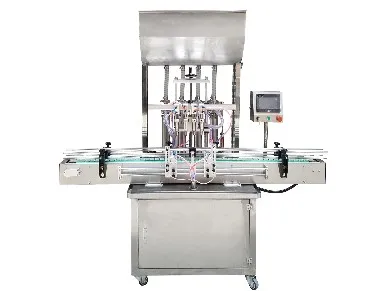
Maintenance basis
The task and interval must be appropriate to the actual machine and competent person; this guide does not replace the machine manual.
Record model, serial number, software or recipe version, pumps, heads, nozzles, sensors and options.
Hours, cycles, products, temperatures, pressures, wash-down, cleaning agents and format changes.
Tube life, seal condition, valve response, leakage, drift, noise, heat, air use and nozzle shut-off.
Fill variation, drips, foam, head imbalance, rejects, prime loss and restart performance.
Guards, interlocks, emergency stops, stored energy, hot surfaces, pressure and safe access.
Lead time, single points of failure, available redundancy and the cost of an extended stop.
Maintenance plan
| Work group | Typical scope to define | Record |
|---|---|---|
| Pre-use operator checks | Cleanliness, visible damage, guards, hoses, leaks, nozzle condition, source connection and abnormal sound. | Date, machine, finding, action and release authority where required. |
| Cleaning inspection | Product-contact parts, seals, tubes, joints, drains and correct reassembly after the approved cleaning process. | Product and changeover, inspected parts, exceptions and post-cleaning release. |
| Planned wear replacement | Tubing, seals, valve parts, filters, belts or other items identified by the specific machine instructions and duty. | Part reference, cycles or hours, condition, replacement and next review basis. |
| Calibration or quantity checks | Metering-head balance, scale or measuring equipment, approved method and response to drift. | As-found result, adjustment, as-left result and traceability required by the user's system. |
| Safety-function inspection | Guards, interlocks, emergency stops and other safety-related functions according to the risk assessment and instructions. | Competent person, test method, result, defect and return-to-service approval. |
| Technical service | Drive, pump, pneumatics, electrics, sensors, software backup, line interfaces and observed failure history. | Work completed, parts, settings, verification run and unresolved actions. |
Maintenance must be planned and carried out safely. HSE guidance covers safe maintenance and the need to isolate equipment and stored energy before work: HSE maintenance of work equipment.
Critical spares
A large spares list is less useful than a controlled list tied to the exact configured machine.
| Spares category | Examples to verify for the machine | Stocking decision |
|---|---|---|
| Product-path wear parts | Tubes, O-rings, seals, diaphragms, valve seats, nozzle seals and compatible hose assemblies. | Product and cleaning compatibility, expected life, shelf life and number needed for a complete change. |
| Format and handling parts | Guides, holders, belts, sensor brackets, tooling and container-specific components. | Damage likelihood, changeover frequency and whether production can run without the item. |
| Pneumatic parts | Approved valves, cylinders, regulators, fittings, silencers and tubing. | Criticality, correct specification and whether substitution changes safe function. |
| Electrical and control parts | Sensors, relays, power supplies, drives or interface modules identified in the supplied documentation. | Lead time, configuration or parameter backup and competent replacement requirements. |
| Service tools and references | Correct tools, calibration equipment, software backup, drawings, manuals and part list. | Access control, version control and availability at the machine. |
Useful support request
Questions buyers ask
Use the machine instructions, operating hours or cycles, product and cleaning duty, observed wear and failure history. A fixed annual interval may be insufficient for high duty or excessive for lightly used equipment.
Prioritise exact product-path wear parts and components whose failure would stop production for longer than the business can tolerate. Use the configured parts list, lead time, shelf life and competent replacement requirement.
Follow the specified tube and machine instructions, then refine the interval from actual duty, product, cleaning, compression, visible condition and fill-performance data. Do not wait for leakage if a controlled preventive interval is required.
Model and configuration, dates, hours or cycles, products, parts changed, settings, as-found symptoms, fill results, alarm history and verification after work help distinguish recurring wear from product or setup variation.
Only after its specification, product compatibility, pressure or electrical rating, safety function and configuration have been confirmed. Appearance alone does not establish interchangeability.
Confirm correct reassembly, guards and safety functions, product-path cleanliness, settings, prime, leaks, nozzle operation, fill results, stop and restart, and any line interface affected by the work. Record release under the user's procedure.
Related support guides
Identify the configured machine
For a planned spares review, include operating duty, products, cleaning method, current parts list and the production consequence of each critical failure.