
Product safety data
Provide current SDS and process information, including concentration, temperature, flash point where relevant, vapour, corrosion and incompatibilities.
Liquid filling machinery guidance
Machinery safety is not limited to guards around the filling heads. Product chemistry, pressure, stored energy, cleaning, maintenance, container handling and interfaces with other machines all affect the risk assessment.
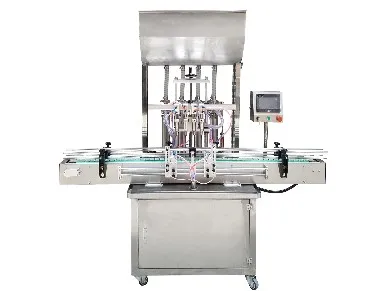
Set the risk-assessment boundary
Safety requirements should be written into the specification and acceptance plan.
Describe intended products, containers, operating modes, cleaning, changeover, fault recovery, maintenance and foreseeable misuse. Identify who loads product and packs, who enters guarded areas, how blockages are cleared and what happens when the filler is connected to conveyors, cappers, labellers or site tanks.
The supplier’s machine risk assessment and instructions do not replace the employer’s site assessment. Installation, local services, substances, people, production pressures and modifications can create risks outside the original machine boundary.
Hazards to include in the project review
Foreseeable interventions often create greater risk than steady automatic running.
| Hazard group | Examples to consider | Project evidence |
|---|---|---|
| Moving machinery | Conveyors, indexing devices, nozzles, pistons, pumps, cappers, pinch points and unexpected restart. | Guarding concept, interlocks, safe distances, emergency stops and restart logic. |
| Stored and supplied energy | Electrical, pneumatic, hydraulic, spring, gravity, pressure and retained motion. | Isolation points, dump/bleed method, lock-off provision and verification procedure. |
| Product and cleaning substances | Flammable, corrosive, toxic, sensitising, hot, cold, pressurised or reactive liquids and cleaning agents. | Current SDS, containment, compatible materials, ventilation/extraction and emergency arrangements. |
| Access and ergonomics | Loading containers, lifting hoses, replenishing caps, reaching change parts, cleaning and maintenance posture. | Task study, access zones, handling aids and operator training plan. |
| Spill and slip | Leaks, nozzle drip, burst hose, overfill, drain route and clean-up. | Containment, detection, safe drainage and spill response. |
| Line interfaces | Gaps between guards, shared emergency stop, conveyor transfer, external start command and upstream pressure. | Integrated layout, safety responsibility matrix and site acceptance test. |
| Maintenance and fault recovery | Clearing jams, replacing seals, adjusting sensors and testing with guards open. | Approved modes, reduced-risk controls, isolation and competent-person requirements. |
Safety information for quotation
Unknown safety information should remain an open requirement, not be guessed.
Provide current SDS and process information, including concentration, temperature, flash point where relevant, vapour, corrosion and incompatibilities.
Do not ask for “ATEX” as a generic option. Provide the site’s competent hazardous-area classification, zone/extent, substance group and temperature information where applicable.
Define automatic, manual, setup, cleaning, maintenance and recovery tasks, including who performs them and what access is required.
Identify power, compressed air, extraction, drainage, washdown, dust, temperature, humidity and surrounding equipment.
State which party supplies conveyors, guarding, controls, emergency-stop circuits, product feed and final site integration.
Define required instructions, drawings, declarations, training, inspections and safety-function demonstrations within the contract scope.
UK machinery-use context
Check the current official guidance for the installation and jurisdiction.
The Health and Safety Executive states that equipment under PUWER must be suitable, safe, maintained and accompanied by appropriate protective measures, information and training. HSE also explains that DSEAR requires workplace risks from fire, explosion and metal-corrosive substances to be assessed and controlled, including classification of areas where explosive atmospheres may occur. The exact duties and technical solution depend on the site and substance.
Safety acceptance questions
Safety evidence should be retained with project and maintenance records.
Demonstrate the agreed guards, interlocks, emergency stops, stop categories, isolation, reset and controlled restart within the machine and line scope. The test plan should state expected behaviour.
No. Supply compliance and the employer’s duties for installation and use are related but separate. The site must assess the installed work equipment and operating environment.
A competent person acting for the dutyholder should determine whether and where an explosive atmosphere may occur. The machinery specification should use that verified classification.
Only where the machine has a specifically designed, risk-assessed mode and procedure that provides adequate protection. Routine production controls should not be improvised for access.
Assess the change, update risk controls, instructions and documentation as required, and test affected safety and process functions before returning the equipment to service.
Continue the specification
Prepare a useful enquiry
Send the current safety data, intended operating and cleaning tasks, site services, layout and any competent hazardous-area information so the machine scope can be reviewed accurately.