
Confirmed
The quotation identifies the tested or established application conditions and the exact configuration included.
Commercial and technical comparison
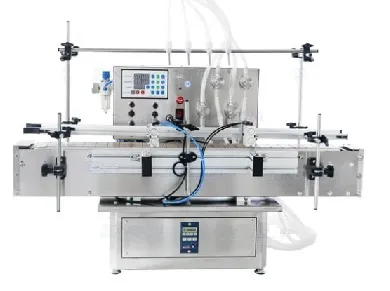
Liquid filling machine quotations should be compared against the same product, pack range, performance method, line boundaries and acceptance evidence. A lower machine price may exclude product feed, container control, change parts, guarding, documentation, installation or trials that another supplier includes. Build a compliance matrix, separate mandatory scope from options and ask each supplier to identify assumptions, exclusions and unproven application points.
Normalise the scope
Record whether every item is included, optional, excluded, customer-supplied or subject to a trial.
| Comparison area | Questions to put against every quotation | Risk if left unclear |
|---|---|---|
| Metering and product path | What principle, pump or meter is proposed? Which wetted parts, hoses, seals and nozzles are included? | A machine label can conceal materially different product handling. |
| Product and pack range | Which exact products, quantities and containers are confirmed, conditional or excluded? | A broad statement may not cover the worst-case combination. |
| Container handling | How are containers fed, detected, spaced, stopped and transferred? Which format parts are included? | The filler may meter correctly but fail to run the real pack reliably. |
| Output basis | Is the rate a dry cycle, filling rate or sustained good-pack line output, and under what conditions? | Unlike figures can appear comparable when they are measuring different events. |
| Changeover and cleaning | What adjustments, replacement parts, strip-down and cleaning actions are expected? | Labour, downtime and product separation may be omitted from the purchase comparison. |
| Controls and integration | What interfaces, interlocks, conveyors, guarding and upstream/downstream responsibilities are included? | Boundary gaps can emerge late in the project. |
| Trials and acceptance | What will be tested, with which samples, for how long and against which pass criteria? | Suitability can remain an assumption until after order. |
| Documentation and services | Which drawings, manuals, training, installation and support activities are included? | The delivered machine may not include the evidence or site work expected by the buyer. |
Compare evidence as well as promises
A response can be commercially attractive while still needing technical clarification.
The quotation identifies the tested or established application conditions and the exact configuration included.
Suitability depends on a sample trial, final drawing, product data, site survey or another clearly named input.
The function is available but is separately priced and is not part of the base scope.
The buyer is responsible for the item, service, utility, interface or evidence and should budget and plan accordingly.
Clear answers
The answer depends on the product, pack and operating conditions, so the relevant variables should be recorded rather than assumed.
The lowest machine price may omit container feeding, conveyors, product tanks, change parts, guarding, integration, trials, commissioning or documentation that another quotation includes. It may also rely on customer-supplied labour or services. Compare the total accepted scope and remaining project risk, not only the line labelled machine price.
Ask every supplier to state what the output figure measures, which product and pack it assumes, how many heads are used, what fill quantity applies, and whether normal stops, container supply and downstream acceptance are included. Convert the comparison to accepted finished packs over an agreed test period rather than comparing isolated cycle times.
High-risk exclusions are usually product trials, product feed, difficult container handling, change parts, safety integration, upstream and downstream interfaces, site services and acceptance testing. An exclusion is not automatically unacceptable, but its owner, cost, timing and technical dependency should be understood before order rather than discovered during installation.
Options should be mapped to the requirement they solve and the condition that makes them necessary. For example, a diving nozzle, dedicated format set or product tank should not be compared as a feature count. Record whether it is essential for the current application, useful for a future range or only a contingency subject to trial evidence.
Request a clear technical offer, proposed product path, scope and boundary list, sample-trial or demonstration record where relevant, layout information, utility assumptions, changeover description and an acceptance plan. The evidence should identify what is proven, what is calculated or assumed, and what remains to be confirmed after final samples or drawings.
Continue your specification
Use the next guide that matches the unresolved part of the application.
Give each supplier the same controlled requirement before comparing responses.
Compare whether each quotation offers equivalent acceptance evidence.
Review the scope and application variables that influence a configured quotation.
Send the product, container, target quantity and production context so the filling method and trial scope can be reviewed.