
Product behaviour
Viscosity, foam, particles, temperature and chemical compatibility.
Selection and comparison guides
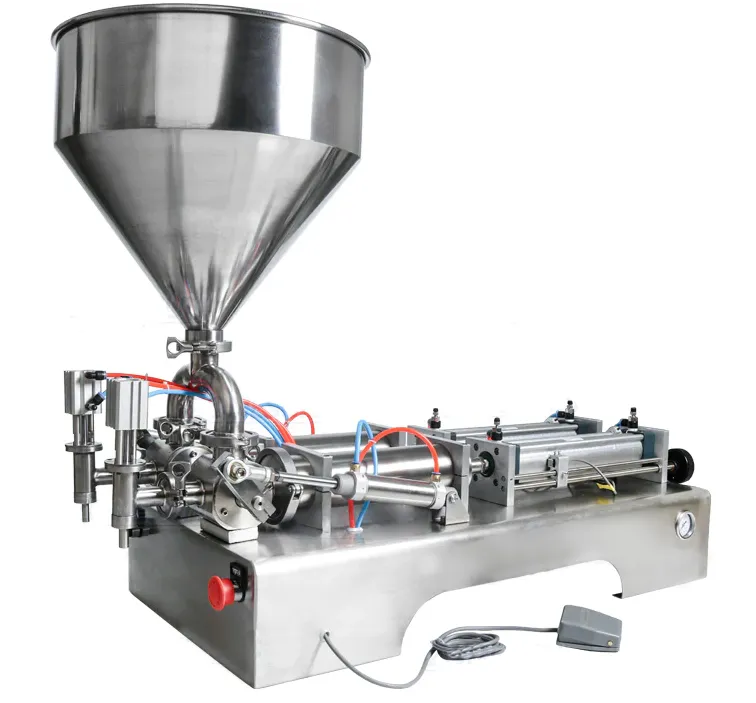
Adding filling heads can increase output, but only if bottle handling, capping and labelling keep up. This page helps decide whether a two-head or four-head filler is the better step.
Buyer intent guide
The best choice is rarely decided by one factor. A method that works well for a thin chemical may not suit a viscous food product, and a machine that is fast on one bottle format may slow down when changeovers are frequent.
Viscosity, foam, particles, temperature and chemical compatibility.
Bottle, jar, pail or jerrycan size, neck opening, stability and closure.
Fill volume or weight, accuracy tolerance and required bottles or packs per minute.
Manual loading, semi-automatic operation, compact automation or full inline production.
Specification notes
These points help make an enquiry more accurate and reduce the risk of selecting the wrong filling principle.
The same bottle filling machine can perform very differently when the liquid changes. A water-thin cleaner, a foaming detergent, a viscous sauce, a fragrance oil and a corrosive chemical each create different challenges. Product behaviour drives pump selection, nozzle design, materials and speed.
For a strong recommendation, include the product type, approximate viscosity, whether it foams or strings, whether it contains particles and whether it needs heating, mixing or special materials.
Filling speed should be balanced with capping, labelling, operator loading and packing. A fast filler does not improve the line if bottles cannot be presented, capped or labelled at the same rate.
For growing production, Lancing can discuss a sensible route from semi-automatic equipment to compact automation or a fully automatic filling line.
Relevant machinery
These product pages are useful starting points when discussing two head vs four head filling machine.
Relevant Lancing machinery to discuss when specifying two head vs four head filling machine projects.
View productRelevant Lancing machinery to discuss when specifying two head vs four head filling machine projects.
View productRelevant Lancing machinery to discuss when specifying two head vs four head filling machine projects.
View productRelevant Lancing machinery to discuss when specifying two head vs four head filling machine projects.
View productFAQs
No. Product supply, fill time, container indexing and downstream equipment must support the extra heads. Stable head calibration and container spacing also matter, so compare sustained good-pack output under the same product and pack conditions.
Provide the product, fill quantity, container and required finished-pack output. Include bottle handling, capping and labelling capacity, plus expected replenishment and changeovers, so the comparison accounts for the whole production process.
Use representative product and packs for an agreed period, recording stoppages, rejects and required sample checks. The acceptance plan should cover each relevant filling head and operating state, rather than relying on a peak cycle rate or a single combined average.
Need a recommendation?
Lancing will recommend a suitable semi-automatic, compact or fully automatic filling solution.