
Product behaviour
Servo piston systems are useful where controlled acceleration, fill profiles and repeatable settings matter. They can support products that need careful handling at the start and end of each fill.
Servo piston fillers
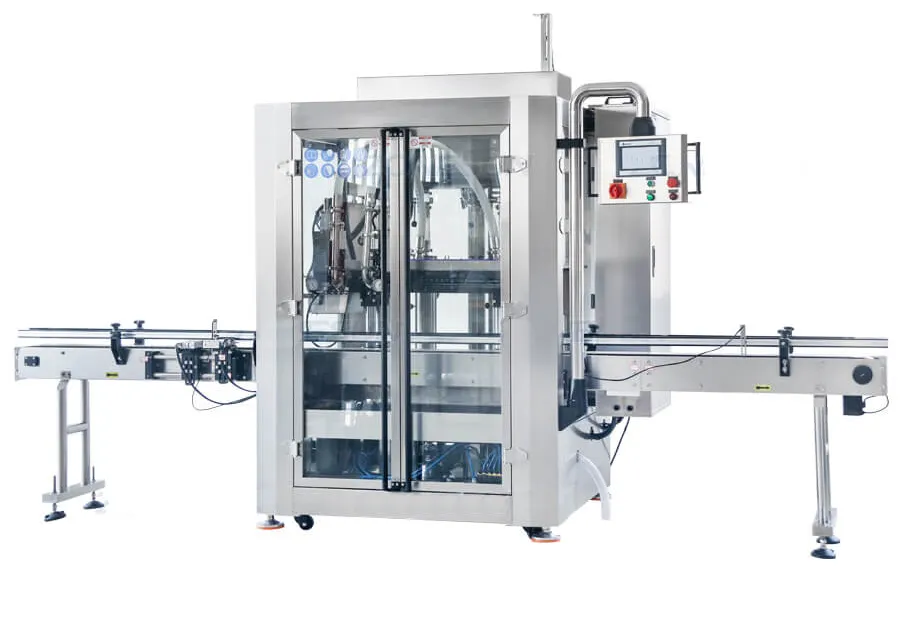
Servo piston filling machines use controlled piston movement to improve accuracy, repeatability and recipe-based changeover. Lancing can specify servo filling systems for liquids, creams, sauces and pastes.
Specification guide
Use these notes to narrow the specification before requesting a quotation.
Servo piston systems are useful where controlled acceleration, fill profiles and repeatable settings matter. They can support products that need careful handling at the start and end of each fill.
Confirm bottle, jar, vial, bucket or jerrycan dimensions, neck opening, fill volume range and whether the same machine must cover multiple formats.
Daily volume and containers per minute decide whether a compact, semi-automatic or fully automatic configuration is the sensible starting point.
Product-contact parts, hose sets, hopper design and tool-free changeover can make a major difference when products or container sizes change regularly.
Applications
Lancing can review the product, container and target output to recommend a practical machine configuration rather than a generic one-size-fits-all filler.
Relevant machines
Automatic filling machines
High‑speed servo piston filler with following nozzles that track bottles on the move. Set volume directly on the touchscreen; electric‑eye detection and a feeding pump help maintain accuracy at speed (≈40–80 bpm).
View details
Automatic filling machines
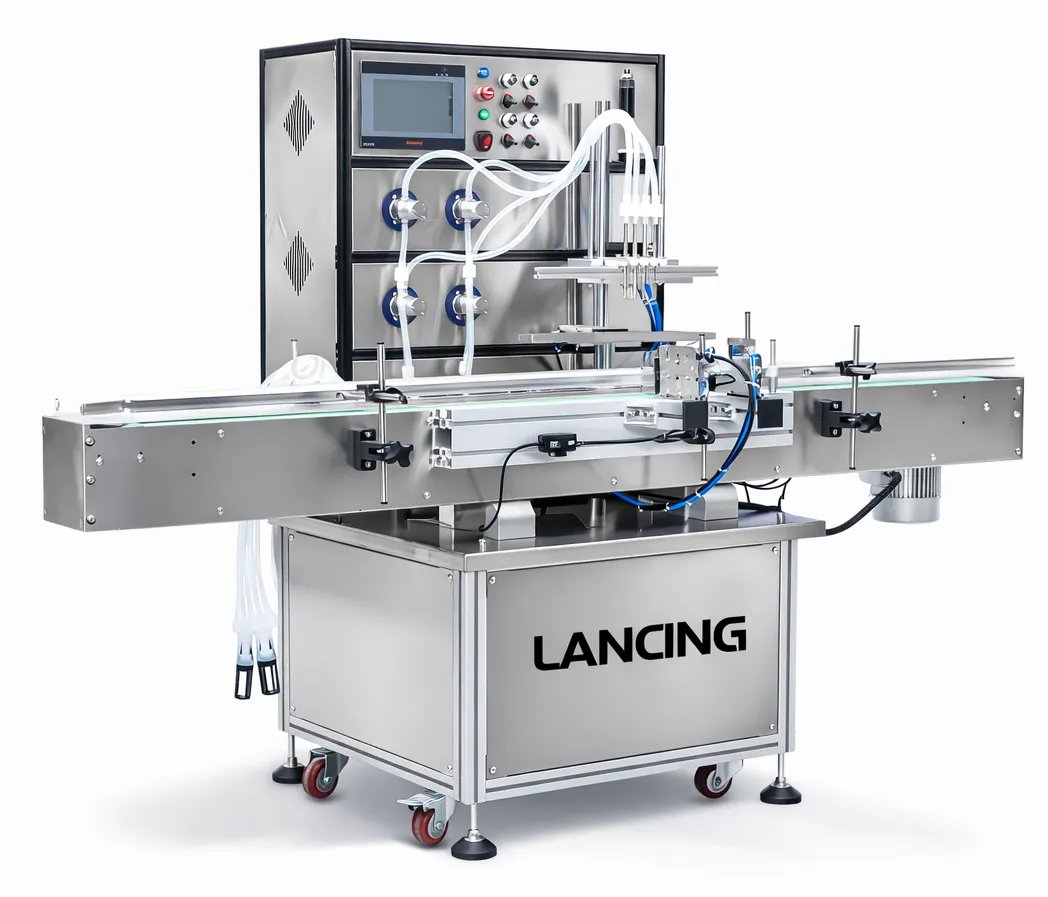
Four‑nozzle automatic piston filler for honey, sauce, cream and lotion. Choose the appropriate cylinder module for your fill size.
View details
Compact filling machines
Tabletop 2–4 head piston filler for soaps, shampoos and viscous liquids. Accurate volumetric dosing with ≤±1% typical accuracy.
View details
Semi-automatic filling machines
The semi-automatic system offers separate machines each requiring manual product placement but still affording a very significant improvement in production rates compared to manual filling, capping and labelling. Lancing…
View detailsRelated guides
FAQ
The main details are product name, viscosity, fill volume, container dimensions, closure type, required output, cleaning requirements and whether the liquid is foamy, corrosive, flammable, hot-filled or hygienic.
Yes. Lancing can discuss semi-automatic, compact and fully automatic configurations depending on output target, operator involvement and future production plans.
The best method depends on product behaviour. Thin liquids, viscous products, foamy liquids, corrosive chemicals and high-value small fills may each need a different filling principle.
Speak to Lancing
Send the product, container, fill range and target output. Lancing will recommend a suitable semi-automatic, compact or fully automatic option.